|
One Day in Chinatown Singapore: A Daytime Itinerary
What to do in Chinatown Singapore in one day — temples, Maxwell hawker food, heritage, street markets and nightlife, with MRT exits and a route.
Chinatown is the most concentrated dose of old Singapore you can get in a single day. Within a few walkable blocks you’ll find centuries-old temples and mosques sitting beside Michelin-listed hawker stalls, restored shophouses, souvenir-packed market streets and, after dark, some of the city’s best bars. This is a daytime-into-evening itinerary that works whether you have a full day or just a half day — with the MRT exits and a walking route so you’re never doubling back.
Is one day enough for Chinatown?
Comfortably. The whole district is compact and flat, and almost everything below is within a 10-minute walk of Chinatown MRT (NE4 / DT19). A full day lets you pair the heritage sights with a proper hawker lunch and an evening out; if you only have a half day, do the morning temples plus a Maxwell lunch and you’ll still feel you’ve seen the heart of it. The route runs roughly north-to-south and loops back, so you can join at whatever point suits you.
Where to start (and where to base yourself)
Begin at Chinatown MRT, Exit A, which brings you straight up onto Pagoda Street in the middle of the action. A day like this is far easier when you’re not commuting in from elsewhere — staying in the neighbourhood means the temples, hawker centres and bars are all a short walk from your door, and you can duck back to drop shopping or change before the evening. Rucksack Inn is a Chinatown hostel two minutes from the MRT, tucked into a restored heritage shophouse on Temple Street itself, with clean bunk dorms and a sociable common area — a handy, budget-friendly base for exactly this kind of wander-and-return day, and a good spot to swap tips with other travellers over breakfast.
Morning: Temples & heritage
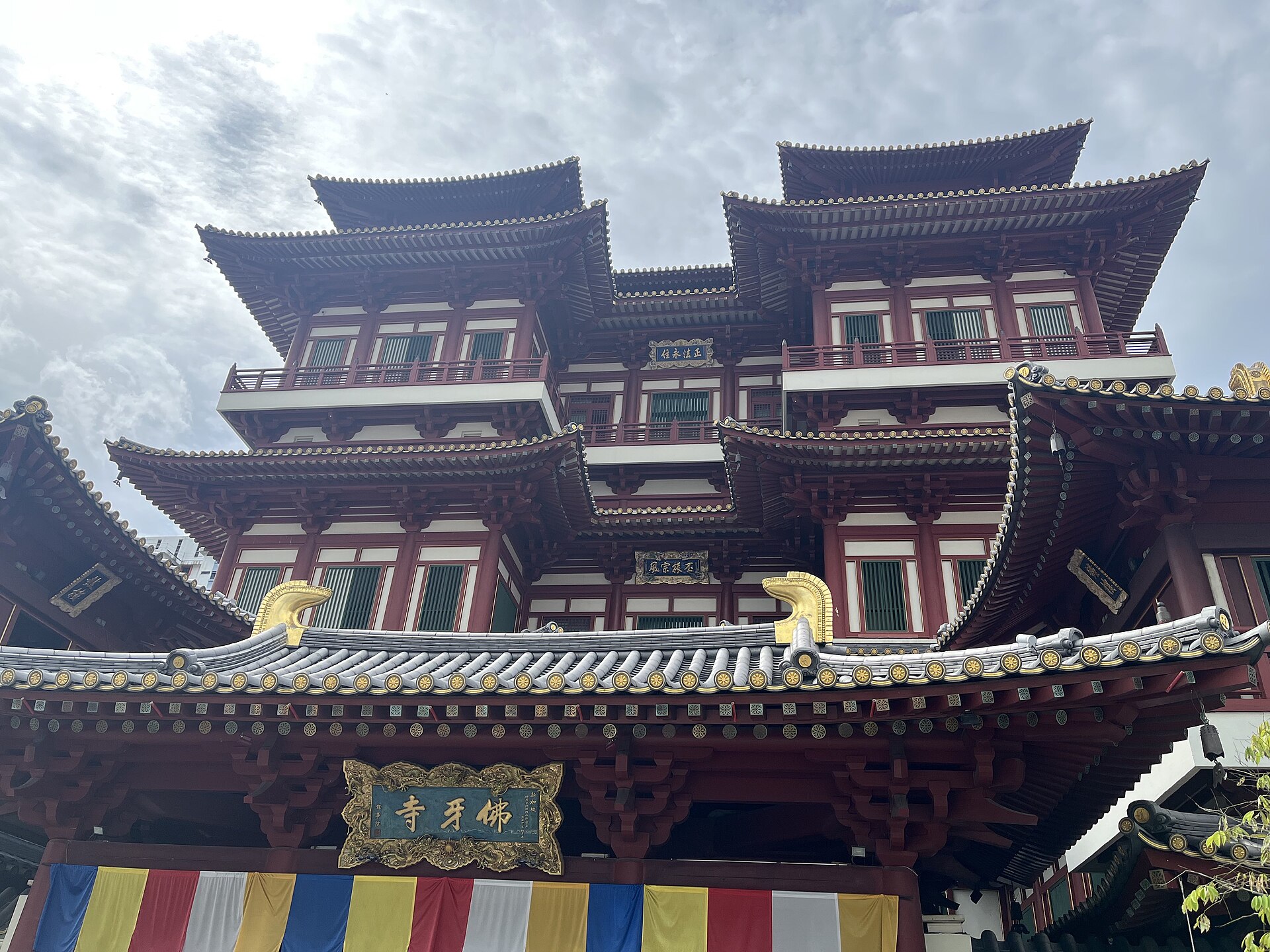
Buddha Tooth Relic Temple
Walk down to South Bridge Road and start at the Buddha Tooth Relic Temple & Museum, an imposing Tang-style temple that’s free to enter and open from around 7am to 5pm. It spans four floors — a grand main prayer hall, a Buddhist culture museum, and the sacred tooth relic itself housed in a giant gold stupa upstairs, with a peaceful rooftop garden above — so give it 30 to 45 minutes. Dress modestly (shoulders and knees covered; sarongs are lent at the door).
Sri Mariamman Temple
A two-minute walk away on the same road is Sri Mariamman Temple, Singapore’s oldest Hindu temple, instantly recognisable by its colourful tiered gopuram tower above the entrance. Entry is free, but note its prayer-time hours — roughly 7–11.30am and again in the evening — so it’s best caught in the morning before the midday break. It’s a reminder that ‘Chinatown’ has always been multicultural: the Masjid Jamae mosque sits just along the same street.
Chinatown Heritage Centre
Double back to 48 Pagoda Street for the Chinatown Heritage Centre, reopened in 2025 inside three restored shophouses (open daily, roughly 10am–8pm). Its recreated 1950s tenant rooms tell the cramped, moving story of the early immigrants who built the district — the best context you’ll get for everything else you’ll see today, and a good source of the kind of surprising facts about Chinatown you can share as you walk.
Lunch: Maxwell Food Centre
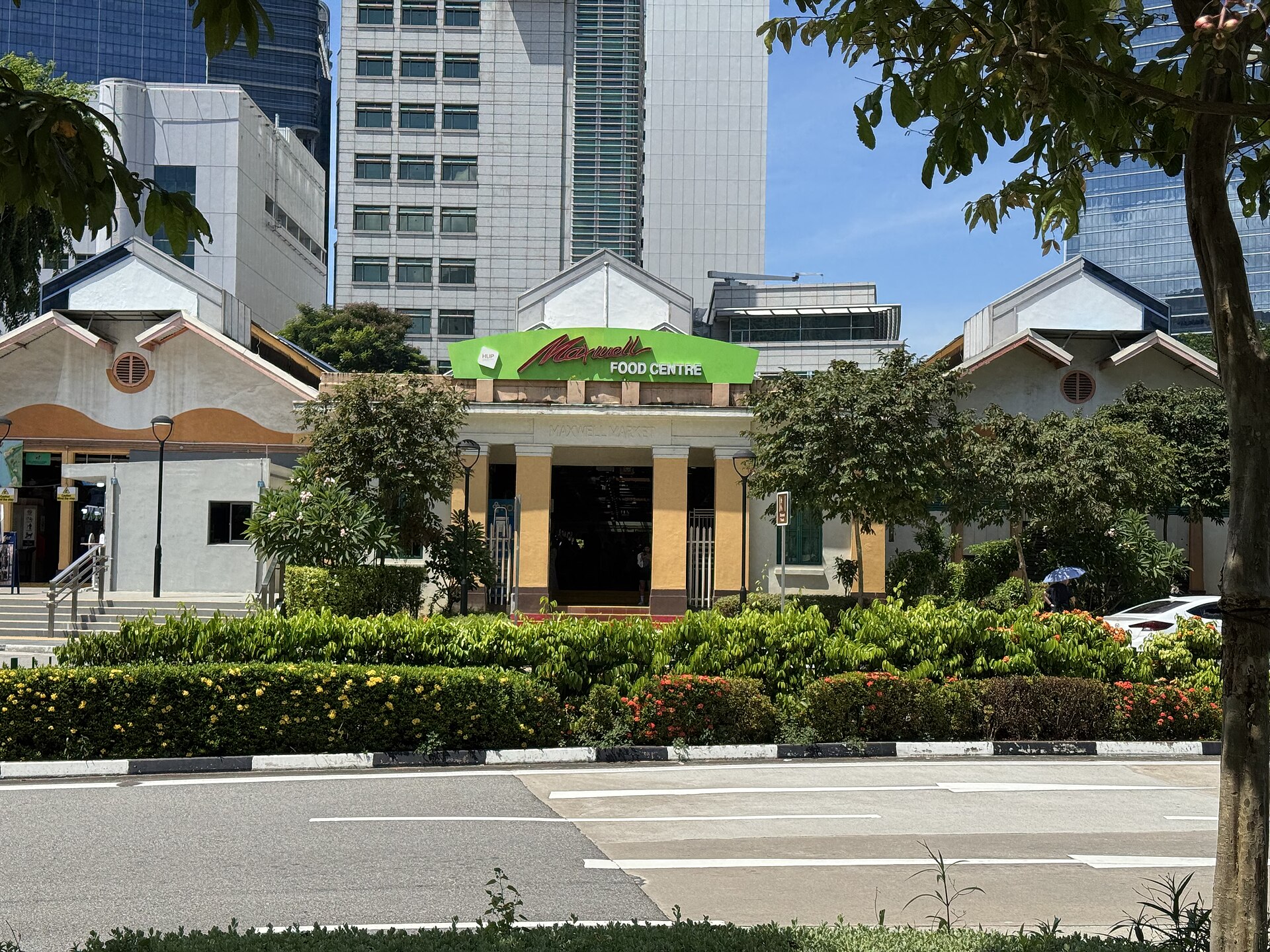
From Pagoda Street, walk down to South Bridge Road and a couple of blocks on you’ll reach Maxwell Food Centre, one of Singapore’s most famous hawker centres. The classic order is Tian Tian Hainanese Chicken Rice, but the whole centre is a hit — porridge, fishball noodles, oyster cake and sugarcane juice all have their champions. Prefer something Michelin-listed? Hawker Chan’s original soya-sauce chicken rice is a short walk away at Chinatown Complex Food Centre, the largest hawker centre in the country.
Afternoon: Markets & murals
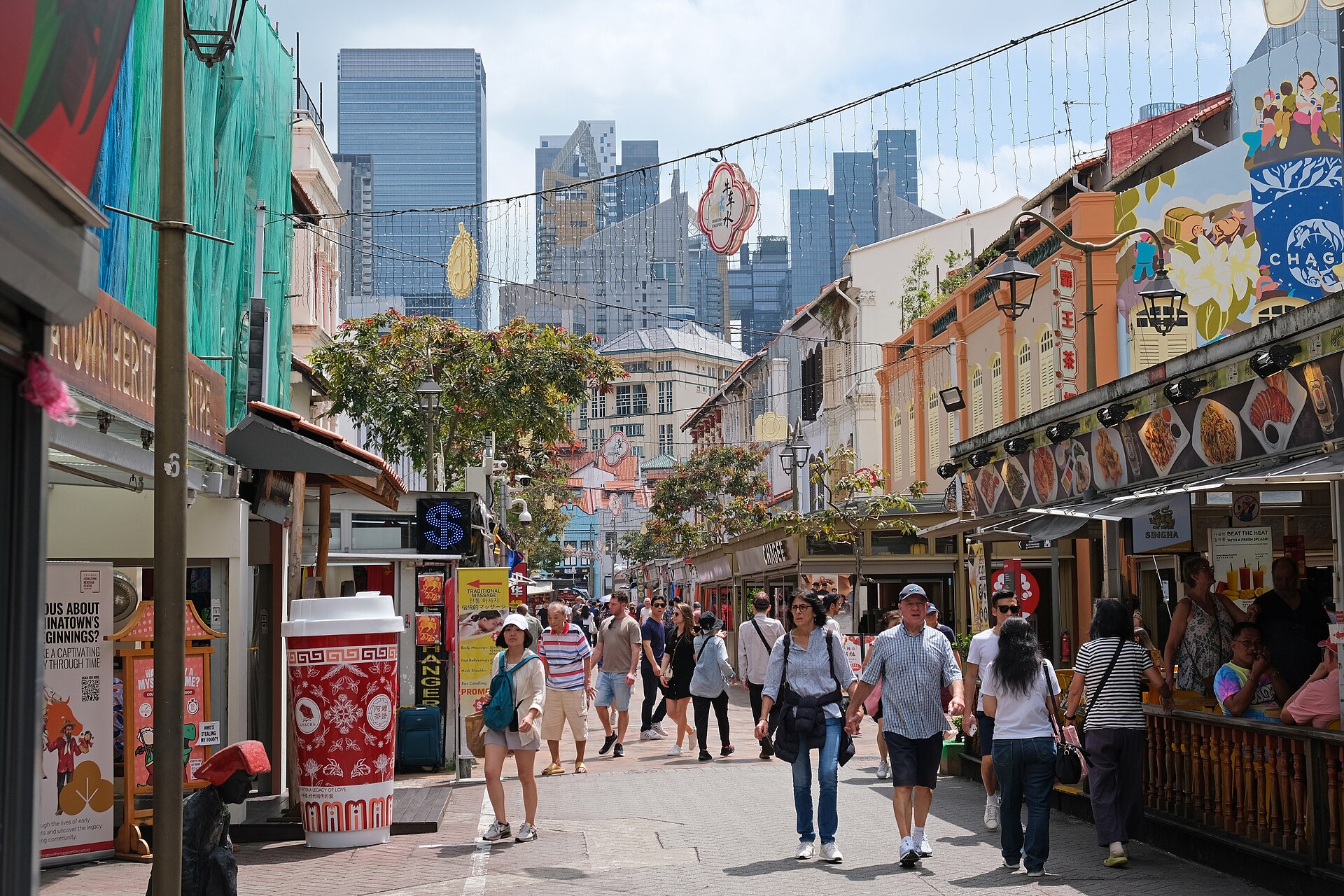
Walk off lunch along the pedestrian market streets. Pagoda, Trengganu and Sago Streets are lined with stalls selling souvenirs, snacks, silk and dried goods — think fridge magnets and trinkets, but also bak kwa (sweet barbecued pork), dried scallops and herbal teas worth taking home. Duck into Chinatown Complex as well: its ground-floor wet market and upstairs hawker centre are where locals actually shop and eat, a world away from the tourist stalls outside. Keep an eye out for the shophouse murals, and the large Thian Hock Keng mural over on Telok Ayer Street depicting the journey of early Chinese settlers. This is also the time to slip into the quieter, hipper lanes nearby — Keong Saik Road, Ann Siang Hill and Duxton Hill — for specialty coffee if you need a break.
Evening: Food & nightlife
As the light drops, Chinatown shifts gear. Grab dinner back at Chinatown Complex or among the restaurants along Smith Street, then head to the rooftop bars and cocktail dens around Ann Siang Hill and Keong Saik Road — the district has quietly become one of Singapore’s best areas for a night out. This is where staying in the neighbourhood pays off: freshen up, walk out, and stroll home whenever you like rather than watching the clock for the last train. Our Chinatown nightlife guide has the full list of bars worth your evening. Travelling on a budget? Exploring Temple Street and Chinatown for under $50 shows how to do the whole area cheaply.
What to eat in Chinatown
Chinatown is one of Singapore’s great eating grounds, and not only at Maxwell. The two-storey Chinatown Complex Food Centre — the largest hawker centre in the country — hides the Michelin-listed Hawker Chan alongside rows of cheap classics; Maxwell is home to Tian Tian’s famous Hainanese chicken rice; and the streets in between fill the gaps with roast meats, claypot rice, dim sum, fishball noodles and old-school desserts. The trick is to graze widely and cheaply, which is exactly how locals do it.
Short on time? A half-day plan
Only have a morning or an afternoon? Do the temples along South Bridge Road and the Chinatown Heritage Centre, then lunch at Maxwell. That trio gives you Chinatown’s history, faith and food in three or four hours, all within a few minutes’ walk of each other. Add the market streets if there’s time, and save the bars for another evening.
Practical tips
- Dress for the temples: cover shoulders and knees; remove shoes where asked. Sarongs are usually lent at the door.
- Beat the heat: it’s hot and humid by midday — do the walking in the morning, duck into air-conditioned museums or cafés at the peak.
- Time the temples: Sri Mariamman closes over the middle of the day, so see it early.
- Carry small cash: hawker stalls and market sellers are largely cash-only.
- Go hungry: pace your eating — Maxwell at lunch, snacks in the market, dinner at Chinatown Complex.
Map & MRT exits
- Chinatown MRT (NE4 / DT19), Exit A → Pagoda Street (start here).
- South Bridge Road (2-min walk) → Buddha Tooth Relic Temple, Sri Mariamman Temple, Masjid Jamae.
- Maxwell Food Centre → a couple of blocks down South Bridge Road; Maxwell MRT (TE18) also serves it directly.
- Telok Ayer Street → Thian Hock Keng temple & mural (5-min walk east).
- Keong Saik / Ann Siang / Duxton → cafés and nightlife, just south of the market streets.
Frequently asked questions
Is one day enough for Chinatown?
Yes — a full day covers the temples, a hawker lunch, the markets and an evening out, while half a day still gets you the highlights.
When is the best time to visit?
Mornings for the temples and cooler walking; evenings for the lanterns, food and bars. Weekends and the run-up to Chinese New Year are busiest and most festive.
Are the temples free to enter?
Yes, all of them. Just dress modestly — shoulders and knees covered — and check prayer-time hours, as Sri Mariamman closes over the middle of the day.
How do you get to Chinatown?
Take the MRT to Chinatown station (NE4 / DT19) and use Exit A for Pagoda Street and the market; Maxwell MRT (TE18) is handiest for Maxwell Food Centre.
Is Chinatown good for families?
Yes — it’s compact, walkable and packed with things to see and eat, with temples and markets that keep all ages interested.
What can you do in Chinatown for free?
Plenty. All the temples are free to enter, as is wandering the market streets, spotting the heritage murals and strolling Telok Ayer — only the Heritage Centre and your meals really cost anything.
Is Chinatown worth visiting at night?
Very much so. The lanterns come on, the food streets and Chinatown Complex buzz, and the bars around Keong Saik Road and Ann Siang Hill make it one of the city’s best areas for an evening out.
That’s Chinatown in a day — temples in the morning, hawker food at noon, markets and murals in the afternoon, and bars by night, all on foot. Stay central, wear comfortable shoes, and let yourself wander down the side lanes; the best of Chinatown is usually one turn off the main street.
Related reading