|
Temples & Places of Worship in Chinatown Singapore
A guide to the Chinatown temples Singapore is famous for, from the Buddha Tooth Relic Temple to Sri Mariamman, Thian Hock Keng and Masjid Jamae.
For a single square kilometre, Chinatown packs in an astonishing range of faiths. Within a few minutes’ walk you can step from a gilded Buddhist hall into Singapore’s oldest Hindu temple, then on to a Hokkien sea-goddess temple and a South Indian mosque. It is one of the clearest illustrations of how the city’s communities have lived side by side for two centuries, and it makes for one of the most rewarding slow walks in town. Here is how to plan a visit to the temples and places of worship in Chinatown, what to expect inside, and how to be a respectful guest.
Buddha Tooth Relic Temple
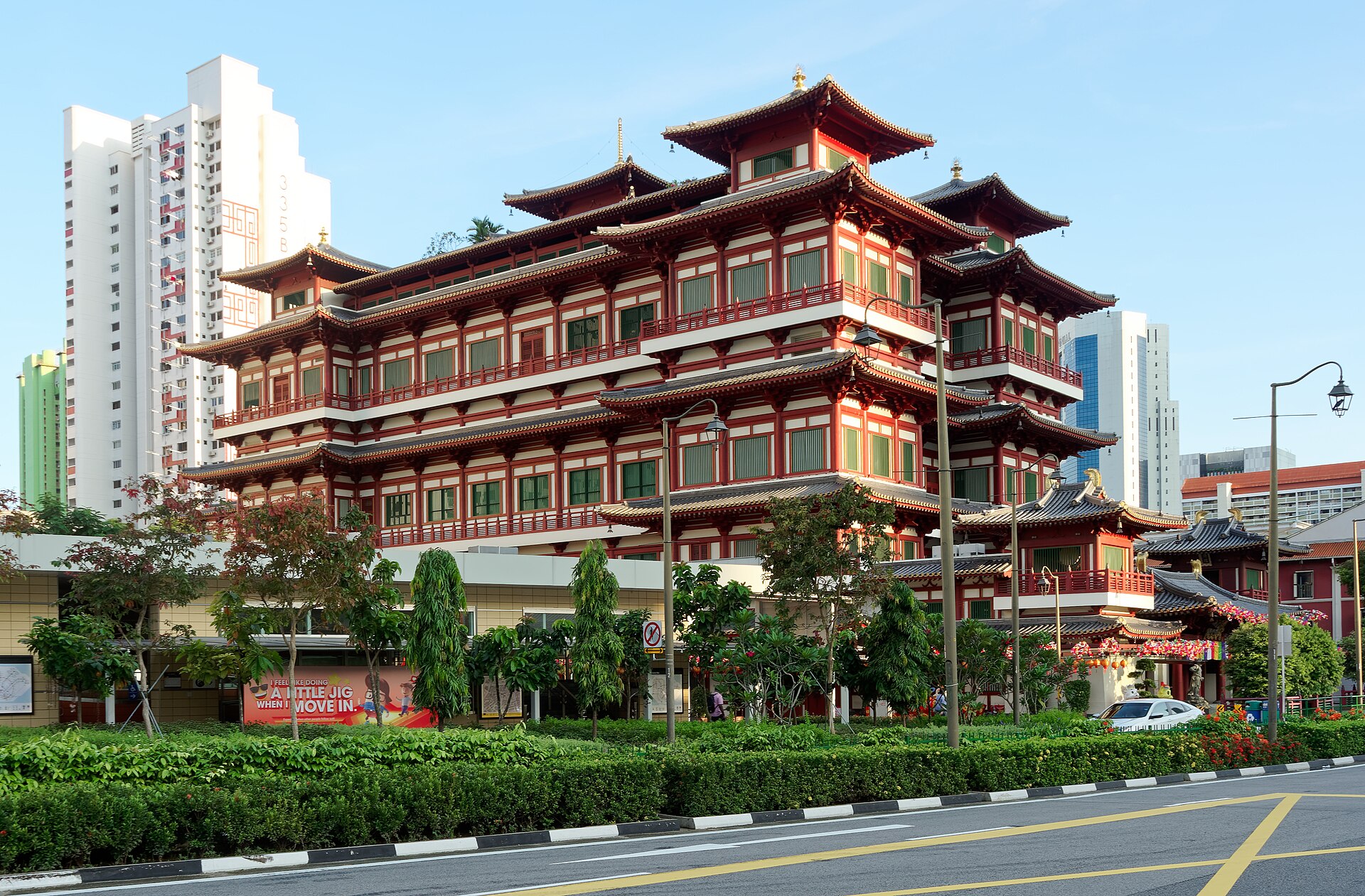
The most photographed of the lot, the Buddha Tooth Relic Temple sits at 288 South Bridge Road and is hard to miss: a five-storey building in the Tang-dynasty style, its facade a wall of red and gold. It opened in 2007, so it is the youngest temple on this list, but it is also the grandest. The main hall on the ground floor is lined with hundreds of Buddha statues, and the showpiece is the relic chamber on the fourth floor, which houses what the temple holds to be a tooth of the Buddha inside a large gold stupa.
Don’t skip the rooftop garden, where a huge prayer wheel sits among orchids — a quiet escape from the street below. There is also a small museum inside the building covering Buddhist art and history.
The temple is open daily, typically from early morning to early evening (around 7am to 7pm), with the museum keeping shorter daytime hours. Entry is free, though donations are welcome. Modest dress is required: cover your shoulders and knees, and shawls are usually available to borrow at the entrance if you need one.
Sri Mariamman Temple
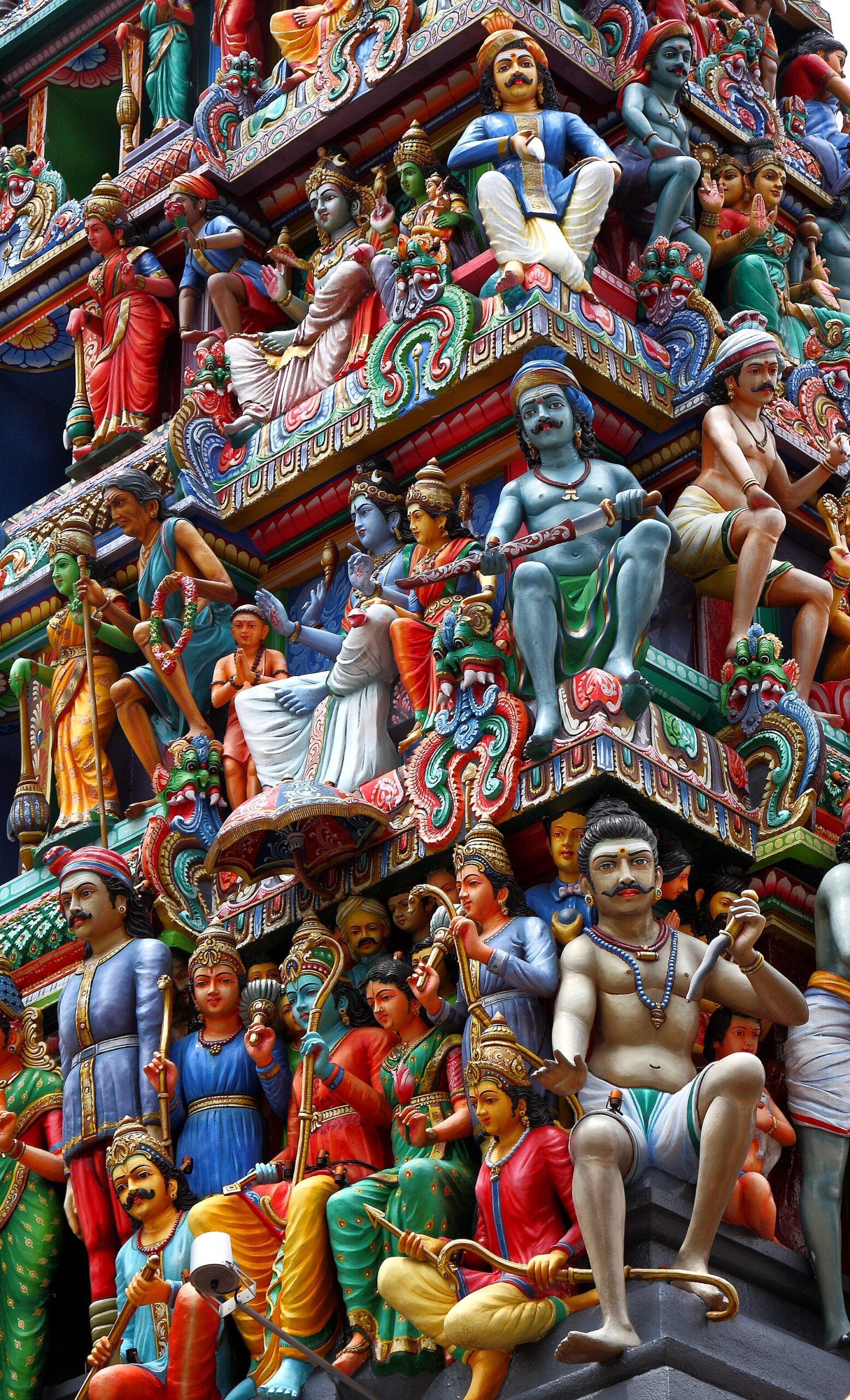
A short stroll up the same road, at 244 South Bridge Road, stands Sri Mariamman Temple — Singapore’s oldest Hindu temple, founded in 1827. You will spot it long before you reach it: the gopuram tower over the entrance is a riot of brightly coloured sculptures of deities and mythological figures, and it is a National Monument. Inside, the temple is dedicated to the goddess Mariamman, known for her power to cure illness.
It is a fully active place of worship, so its hours are tied to prayer times rather than tourist convenience. In practice the temple is open in the morning and again in the evening, with a long closure through the middle of the day, so it pays to time your visit for either an early start or the evening session. If you can, come for the evening prayers, when the bells, oil lamps and incense bring the hall to life. Entry is free; you will need to remove your shoes before going in, and dress modestly.
Thian Hock Keng Temple
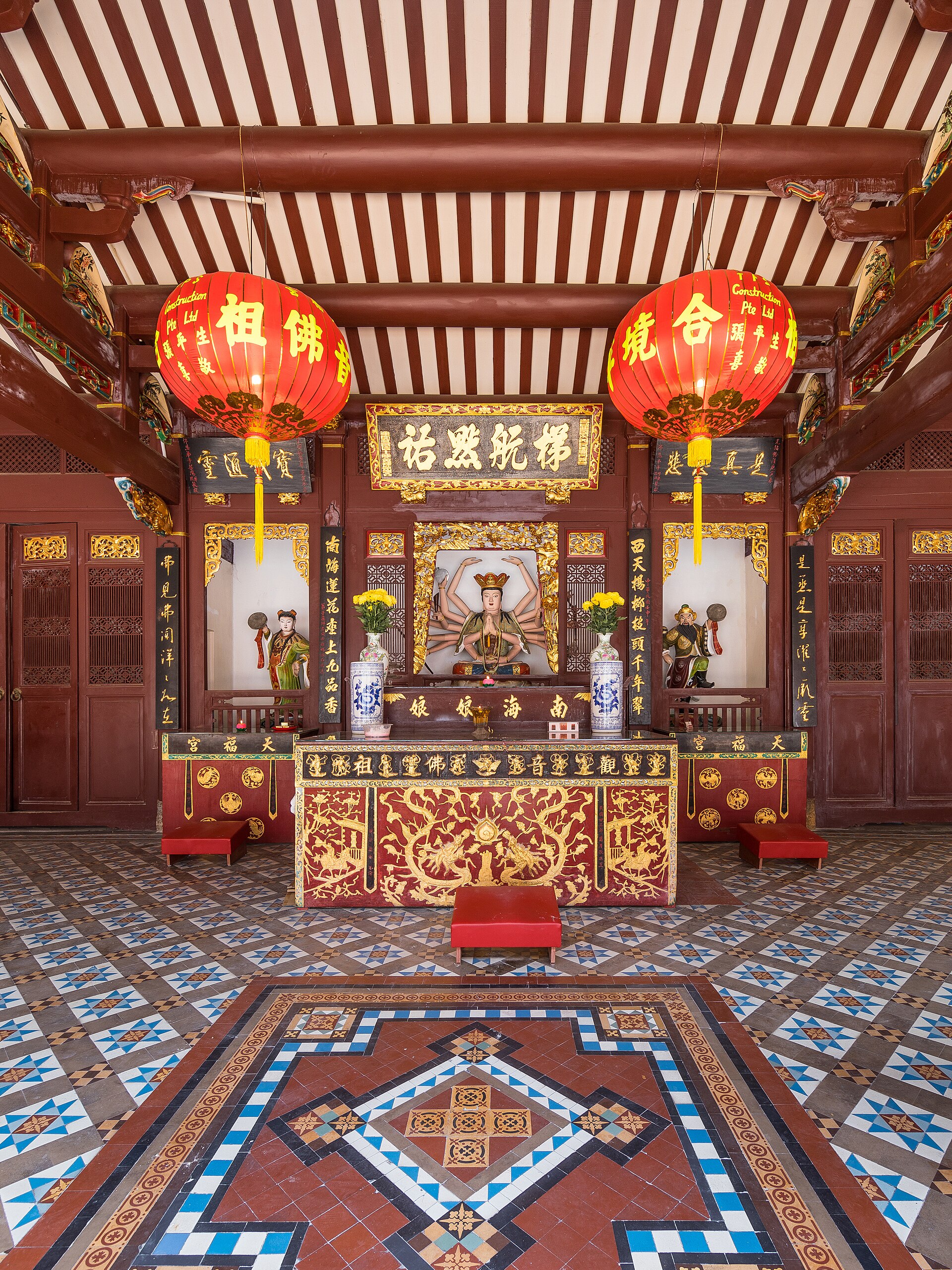
Walk a couple of blocks towards the water and you reach Thian Hock Keng on Telok Ayer Street, Singapore’s oldest Hokkien temple. Completed in 1839, it once stood right on the shoreline before land reclamation pushed the sea away, and it was where Chinese immigrants arriving by junk gave thanks for a safe crossing. The temple is dedicated to Mazu, the goddess of the sea.
It is a masterclass in southern Chinese temple craft — dragon-entwined columns, carved stone, gilded beams and roof ridges crowded with ceramic figures, all built without a single nail in the traditional method. Behind the main temple, look out for a striking mural by local artist Yip Yew Chong that tells the story of the early Hokkien community. The temple is generally open through the day, entry is free, and dress is expected to be modest.
Masjid Jamae (Chulia)
Rounding out the cluster is Masjid Jamae, also on South Bridge Road, one of the oldest mosques in Singapore. Built in the 1820s–30s by the Chulia community — Tamil Muslims from the Coromandel Coast of South India — it blends a South Indian gateway with neo-classical touches, and it too is gazetted as a National Monument. A restoration was completed in 2024, so it is looking especially sharp.
As a working mosque, it welcomes visitors outside of prayer times, generally during set afternoon hours (and slightly later on Fridays); it is worth checking before you go, as times can shift. Entry is free. You’ll need to remove your shoes, and both men and women should be well covered — robes are available to borrow at the door.
How to do the temple walk
All four sit within easy walking distance of one another, which makes a self-guided loop simple. The most logical route runs along South Bridge Road, taking in Sri Mariamman, the Buddha Tooth Relic Temple and Masjid Jamae in one stretch, then a short detour down to Telok Ayer Street for Thian Hock Keng. The loop overlaps neatly with Chinatown’s heritage trail, so you can take in the shophouses and street history on the same morning.
- Getting there: Chinatown MRT (North East and Downtown lines) is the closest station; from Exit A it’s a few minutes’ walk to South Bridge Road. Telok Ayer and Maxwell stations are also handy for the Thian Hock Keng end of the walk.
- Best time to go: Mornings are cooler and quieter; late afternoon into early evening lets you catch Hindu prayers and softer light for photos. Bear in mind Sri Mariamman’s midday closure when sequencing your stops.
- What to wear: Shoulders and knees covered for everyone. Slip-on shoes save time at the mosque and Hindu temple, where you remove footwear.
- Inside etiquette: Ask before photographing people at prayer, keep your voice down, and step around — not through — any ongoing ceremony.
For a deeper sense of how all this came to share one neighbourhood, it’s worth reading up on a few fun facts about Chinatown before you set out — the back-stories make the buildings far more interesting.
Where to base yourself
The temples are clustered so tightly that the easiest way to enjoy them is on foot, early and unhurried, which is far simpler if you’re already in the area. Staying in the heart of the district means you can wander out for the cool morning hours, duck back when the midday sun bites, and return for the evening prayers without a single bus or train ride. Rucksack Inn keeps a heritage-shophouse hostel in Chinatown a couple of minutes from South Bridge Road and the MRT — right among the temples themselves — which makes splitting the walk across cooler parts of the day effortless. Budget bunk dorms and luggage drop make it an easy base for a slow temple morning on foot.
Whether you come for the architecture, the history or simply the calm, Chinatown’s temples and mosques reward a slow, curious visit. Dress modestly, mind the prayer-time hours, and give yourself a morning to take them all in as part of a full day in Chinatown — it’s some of the most atmospheric sightseeing in Singapore, and it costs nothing to walk in.