
|
Chinatown Heritage Trail: Shophouses & History
Walk Chinatown Singapore’s history on foot — from Kreta Ayer’s origins to its conserved shophouses, with a self-guided heritage trail and the Heritage Centre.
Most visitors rush through Chinatown on the way to a meal or a souvenir stall, never realising they are walking through one of Singapore’s oldest neighbourhoods. Look past the lanterns and the crowds and you’ll find a quarter shaped by ox carts, clan associations and waves of migrants who arrived with almost nothing. This is a guide to Chinatown Singapore history on foot — a heritage trail you can do in a morning, with the shophouses, streets and one excellent museum that tell the story.
Where Chinatown began: Kreta Ayer
Singapore’s Chinatown traces back to the Raffles Town Plan of 1822, when the area southwest of the Singapore River was set aside for Chinese migrants. Most came from the southern provinces of China — Hokkien, Teochew, Cantonese and Hakka among them — and the district grew quickly through the 1820s and 1830s as a place to live, trade and gather.
The area’s older name, Kreta Ayer, is the clue to daily life here. In Malay it means “water cart,” and in Chinese the district is still called Niu Che Shui (牛车水), or “ox-cart water.” There was no piped supply in the 19th century, so water was hauled in by animal-drawn carts — an everyday detail that ended up naming the whole neighbourhood. If you enjoy small stories like this, our list of fun facts about Chinatown has more of them.
This was a dense, round-the-clock quarter. The Cantonese-dominated heart of Kreta Ayer was once thick with teahouses, opera theatres and clan halls, and the streets ran on the labour of newly arrived migrants who lived many to a room. That mix of trade, entertainment and overcrowding is exactly the history the trail below brings back to life.
The shophouses: how to read them

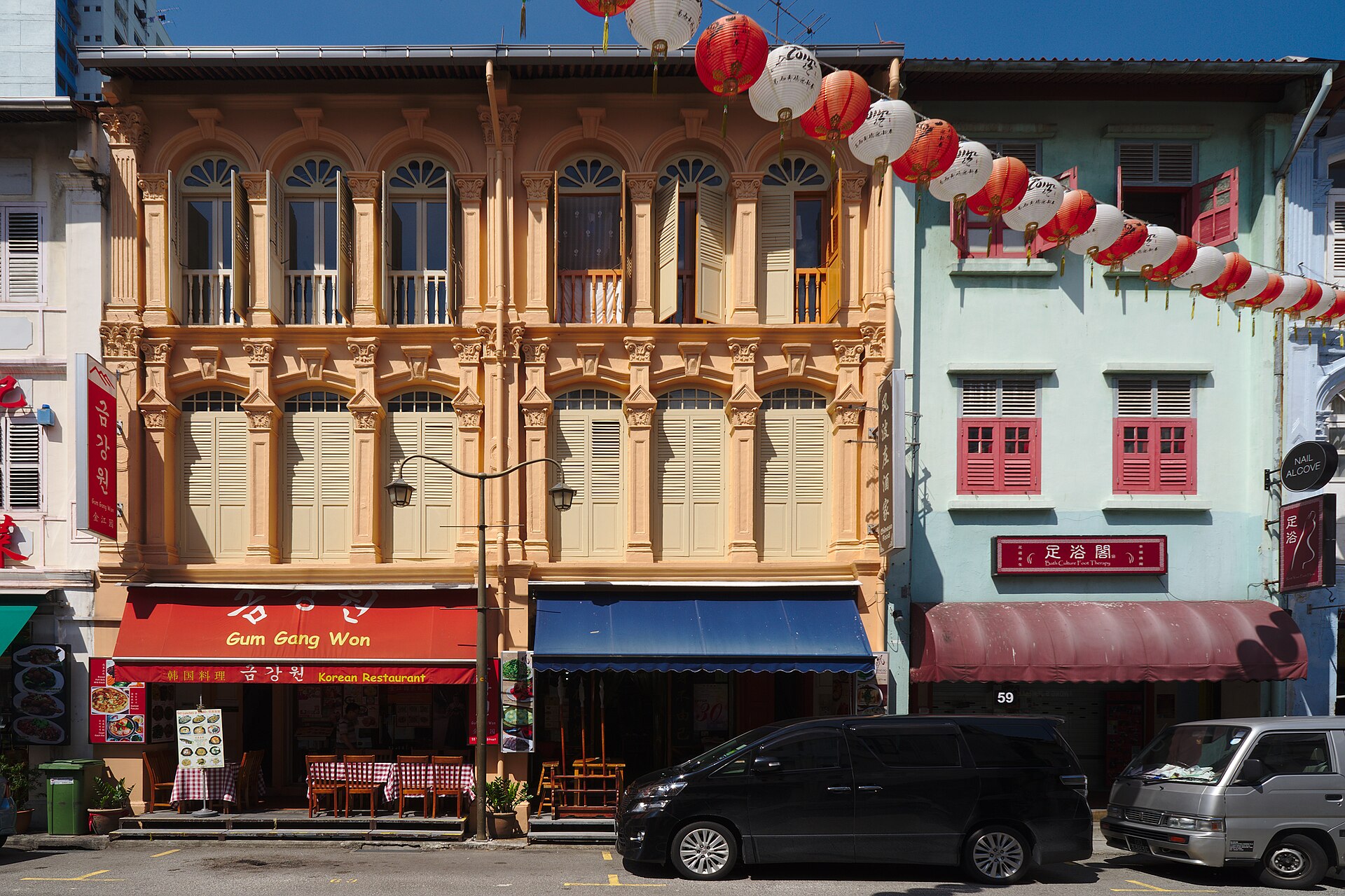
The shophouses are the heart of any Chinatown heritage trail. The format is simple and clever: a shop or workshop on the ground floor, living quarters above, and a covered “five-foot way” running along the front to shelter pedestrians from sun and rain. Families, businesses and sometimes a dozen lodgers were packed into these narrow buildings.
Architecturally they are a magpie’s nest of styles, blending baroque and Victorian details with Chinese and Malay touches — there is no single “correct” classification. Restored examples wear the pastel “painted ladies” look, with timber shutters, decorative plasterwork and ornate fanlights above the windows. Once you’ve spotted the pattern, you’ll see it repeated street after street, each terrace slightly different from the last.
Conservation is the reason any of this survives. In 1989 the Urban Redevelopment Authority gave Chinatown protected status, and the four historic precincts of Kreta Ayer, Bukit Pasoh, Telok Ayer and Tanjong Pagar were saved from the wrecking ball. Façades had to be retained and restored rather than replaced, which is why the streetscape still feels coherent today.
A self-guided heritage trail
You can link the best of it together in a loop of a couple of hours, and it’s easy to swing by Chinatown’s temples and mosques on South Bridge Road along the way. Start at Chinatown MRT and let the streets do the work.
- Pagoda Street: the obvious starting point, lined with restored three-storey terraces and now closed to traffic. This is also where you’ll find the Chinatown Heritage Centre.
- Trengganu Street: once nicknamed “the Piccadilly of Chinese Singapore,” it crosses Pagoda and Temple Streets and forms the busy core of the old tourist belt.
- Temple Street and Smith Street: quieter parallels with more shophouse detail to admire and fewer elbows to dodge; Smith Street has a long association with food and street opera.
- Bukit Pasoh: a short walk away and a complete change of pace — a graceful, low-key street whose Malay name means “Pot Hill,” lined with clan-association buildings and elegant terraces.
There is no entry fee for any of this, and the streets reward slow walking. Look up above the shopfront signage and you’ll catch carved lintels, faded house numbers and the occasional original tilework that the renovations kept.
The Chinatown Heritage Centre
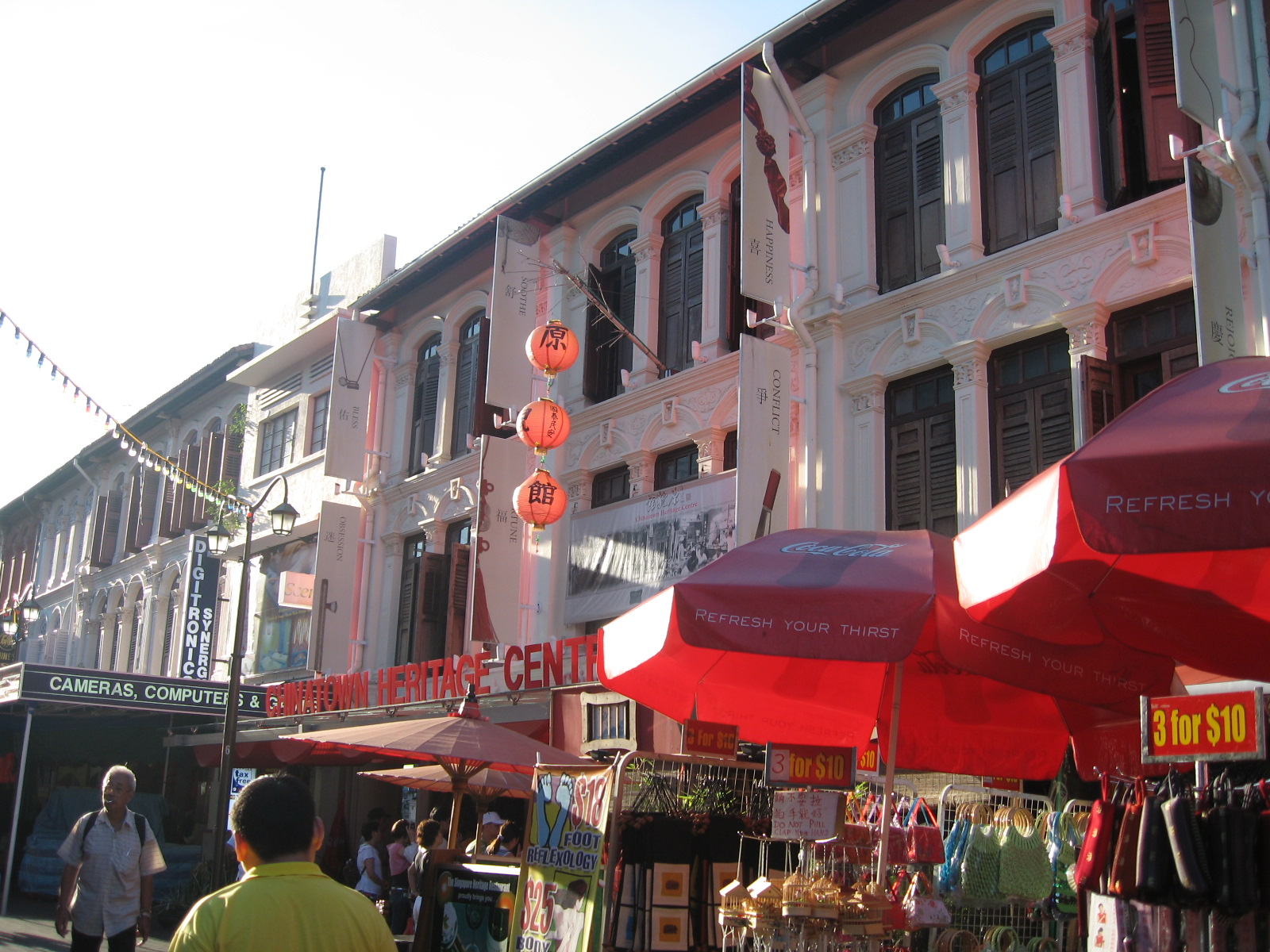
For the indoor half of the story, the Chinatown Heritage Centre at 48 Pagoda Street is the single best stop. Housed in three restored shophouses, it reopened in early 2025 after a refresh and recreates the cramped cubicles and shared kitchens that early residents actually lived in — claustrophobic, moving and a useful corrective to the prettied-up streets outside.
At the time of writing it opens daily, roughly from late morning into the evening, with one closure date each month listed on its website. Entry is ticketed, with reduced rates for Singapore residents, children and seniors. Because hours and prices are reviewed periodically, it’s worth checking the official site before you go rather than turning up cold.
Practical tips for the trail
- Getting there: Chinatown MRT (Downtown and North East lines) puts you at the foot of Pagoda Street; the Exit A escalator surfaces almost on the trail.
- When to go: mornings are coolest and least crowded; the markets and food streets fill up from late afternoon.
- What to wear: light clothing and comfortable shoes — the trail is flat but you’ll be on your feet, and the temples along the way may ask you to remove yours.
- How long: allow two hours for the walk alone, or half a day if you add the Heritage Centre and a hawker lunch.
It also helps to be based nearby, so you can wander out before the crowds and duck back when the afternoon heat peaks. Rucksack Inn keeps a Chinatown hostel among the conserved shophouses on Temple Street, a couple of minutes from the MRT and right on the heritage trail itself — you sleep in one of the very shophouses the trail is about. Budget bunk dorms, luggage drop and a sociable common area make it a handy base if you’d rather explore on foot than commute in.
Frequently asked questions
How old is Chinatown in Singapore?
It dates to the Raffles Town Plan of 1822, which set aside the area for Chinese migrants. The district grew through the 1820s and 1830s, so the neighbourhood is roughly two centuries old.
Why is Chinatown called Kreta Ayer?
Kreta Ayer means “water cart” in Malay, and the Chinese name Niu Che Shui means “ox-cart water.” Both refer to the animal-drawn carts that delivered the area’s water in the 19th century, before piped supply existed.
Is the Chinatown Heritage Centre worth visiting?
Yes, especially if you want to understand how people actually lived here. It recreates the tiny shared cubicles of the old shophouses and reopened in 2025 after a refresh. It is ticketed, so check current hours and prices on the official site first.
How long does the Chinatown heritage trail take?
The walking loop through Pagoda, Trengganu, Temple, Smith and Bukit Pasoh streets takes about two hours. Add the Chinatown Heritage Centre and a meal and it becomes a comfortable half day.
Chinatown rewards the traveller who slows down. The shophouses, the street names and the museum on Pagoda Street together turn a quick photo stop into a real walk through Singapore’s past — and it’s all within a few flat, shaded streets of one another.
Related reading