|
Pagoda & Trengganu Street Markets: A Shopping Guide
Your guide to the Chinatown street market in Singapore — what to buy on Pagoda and Trengganu Streets, opening hours, bargaining tips and the nearest MRT exit.
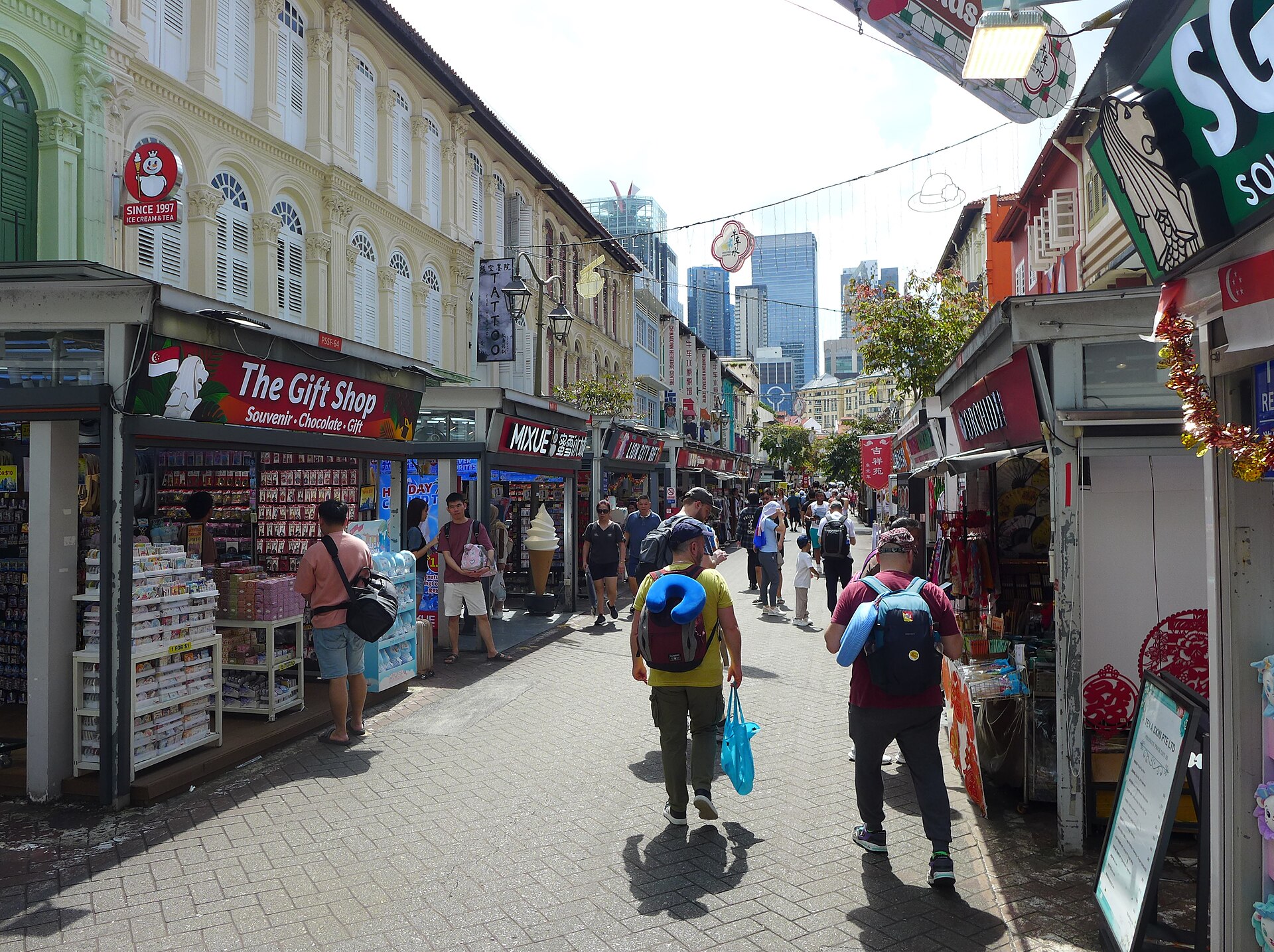
Tucked under rows of red lanterns and restored shophouses, the Chinatown street market in Singapore is one of the city’s most photographed shopping spots — and one of its easiest to enjoy on a budget. The action centres on Pagoda Street and Trengganu Street, where canvas-covered stalls spill out with everything from zodiac keychains to silk robes and dried snacks. This is a practical guide to what’s worth buying, when to come and how to navigate the lanes without overpaying.
The lay of the land: Pagoda, Trengganu and beyond
The market isn’t a single building but a web of pedestrianised streets in the Kreta Ayer heart of Chinatown. Pagoda Street is the main artery — fully closed to traffic and lined end to end with souvenir stalls. Trengganu Street runs across it, crossing Pagoda, Temple, Smith and Sago Streets, so it stitches the whole quarter together and is the natural way to wander between lanes.
Sago Street, Temple Street and Smith Street round out the grid. They tend to be a touch quieter than Pagoda, with a heavier lean toward food, dried goods and the occasional traditional trade. If Pagoda Street feels like a wall of people, slip one street over and the crowds thin out fast.
Everything here is within a couple of minutes’ walk, so there’s no need to plan a route. Start at the top of Pagoda Street and let the cross-streets pull you sideways whenever a stall catches your eye.
What to buy at the Chinatown street market
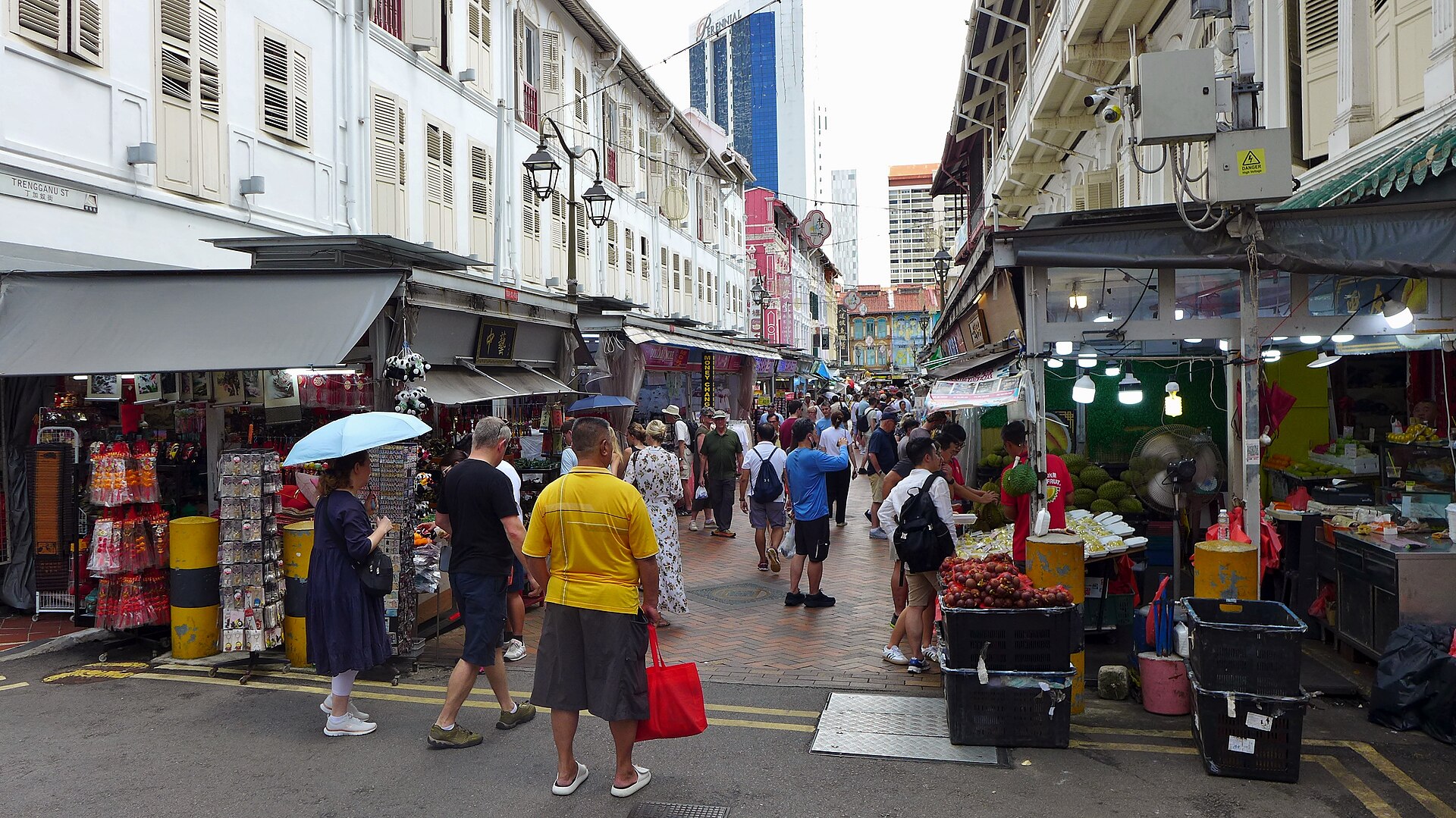
The stalls are heavy on classic, inexpensive souvenirs, but there’s real variety if you look past the first row. These are the things worth your dollars.
- Souvenirs and trinkets: zodiac keychains, fridge magnets, printed t-shirts, folding fans and Singapore-themed knick-knacks — the cheap-and-cheerful gifts to bring home by the handful.
- Silk and clothing: printed silk robes, cheongsam-style dresses and embroidered slippers, plus light cotton tops that suit the climate.
- Decorative pieces: paper lanterns, wooden carvings, ceramic figurines, miniature pagodas and feng shui ornaments for anyone furnishing a shelf back home.
- Calligraphy and stationery: scrolls, brushes, ink stones and decorative chopstick sets — some of the more giftable items in the market.
- Chinese tea and dried goods: loose-leaf teas, sweets and packaged snacks, with the heavier dried-goods stalls clustered on the quieter side streets.
For the famous bak kwa — sweet, smoky barbecued pork that locals queue for, especially around Chinese New Year — step a block out to New Bridge Road. The two big names, Lim Chee Guan and Bee Cheng Hiang, sit close together there and are a short walk from the market lanes. Expect a line at peak season, but it moves.
Opening hours and the best time to visit
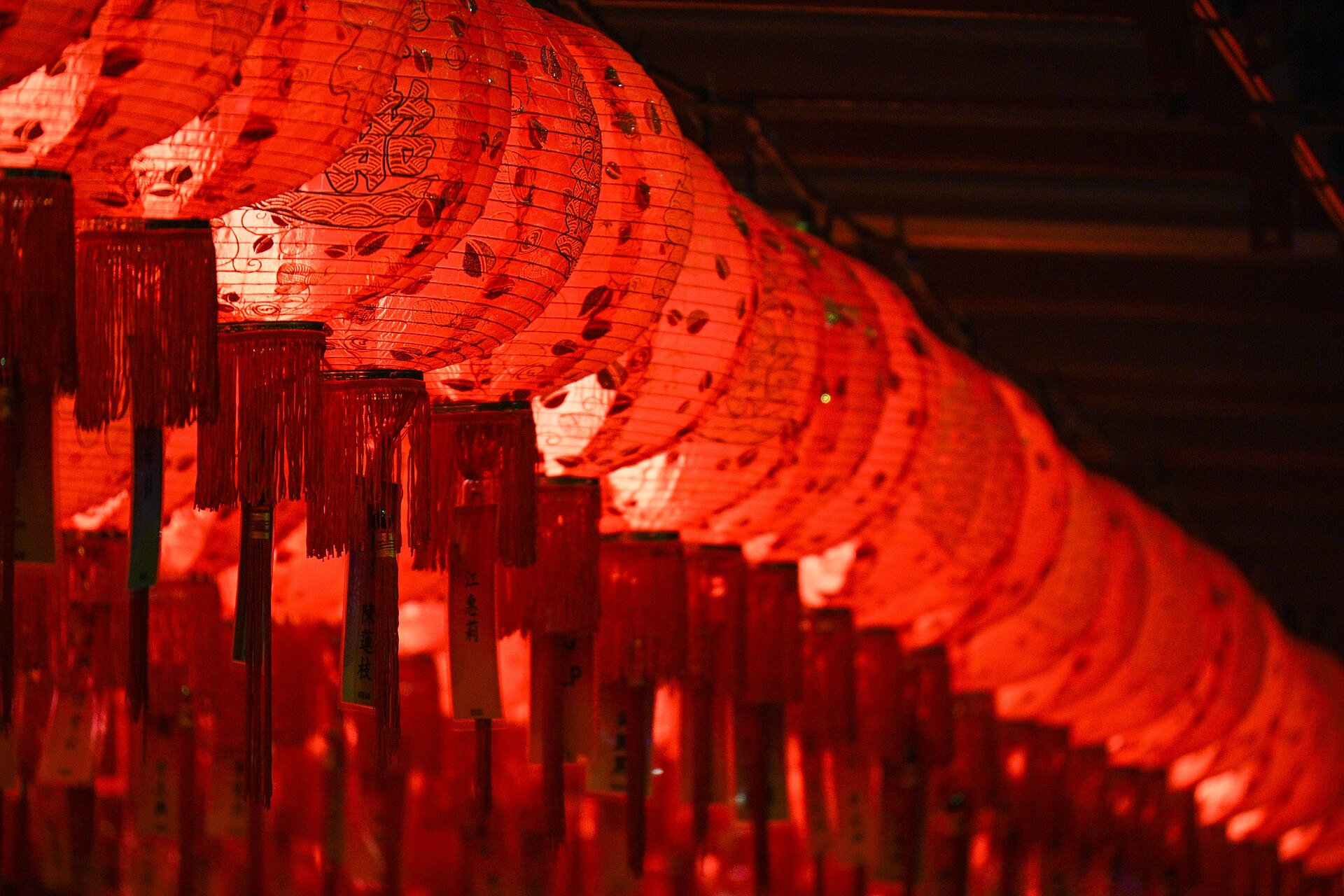
The street market runs every day, with most stalls trading from mid-morning until around 10pm. A few snack and drink vendors hang on a little later, and the quieter side-street shops can wind down earlier, from about 8pm or 9pm.
The best time to come is late afternoon into the evening. That’s when the red lanterns switch on, the heat eases and the streetscape looks its best — but it’s also the busiest, so if you prefer elbow room over atmosphere, a mid-morning visit gets you the same stalls with a fraction of the crowd. Either way, entry is free.
Chinese New Year is the market’s high season. In the weeks before the festival the lanes are dressed up, extended stalls appear and the whole quarter buzzes well into the night — wonderful to experience, but expect serious crowds.
How bargaining works here
This isn’t a haggle-hard bazaar. Many stalls mark fixed prices, and prices are generally clearer and more upfront than at markets elsewhere in the region. That said, there’s still room to ask, especially on souvenirs.
- Buy in bulk: the easiest discount is volume — pick up several keychains, magnets or fans from one stall and ask for a better price on the lot.
- Stay friendly: a polite, good-humoured ask works far better than pushing hard; vendors are used to it and will often meet you partway.
- Compare first: the same trinkets repeat from stall to stall, so a quick walk down Pagoda Street tells you the going rate before you commit.
- Have small notes and cash: many stalls take cards or QR payment now, but cash and small change still smooth the smaller buys.
Getting there
The market sits right on top of the MRT, which makes it one of the simplest places in the city to reach.
- By MRT: take the train to Chinatown station (NE4 / DT19 on the North East and Downtown lines). Exit A surfaces directly onto Pagoda Street, in the thick of the stalls — you can’t miss it.
- On foot: the whole market grid is flat and pedestrianised, so once you’re out of the station everything is a few minutes’ stroll from everything else.
- What to bring: light clothing, comfortable shoes and a foldable bag for whatever you carry home; the lanes are sheltered by stall canopies but Singapore’s afternoons are warm and humid.
Make the market your front yard
Half the pleasure of the Chinatown street market is dipping in and out — browsing in the cool of the morning, retreating from the afternoon heat, then coming back when the lanterns glow. That’s far easier when you’re staying within the quarter rather than commuting in across town.
Rucksack Inn keeps a Chinatown hostel on the market’s doorstep, a couple of minutes from Chinatown MRT and right among the heritage shophouses, with budget bunk dorms, luggage drop and a sociable common area — a handy base if you’d rather wander the market lanes on foot than fight the crowds twice a day.
Frequently asked questions
What can you buy at the Chinatown street market?
Mostly affordable souvenirs and gifts — zodiac keychains, fridge magnets, folding fans, printed t-shirts, silk robes, paper lanterns and decorative chopsticks. Side stalls add Chinese tea, snacks and dried goods, and New Bridge Road nearby is the place for bak kwa.
What are the Chinatown street market opening hours?
The market runs daily, with most stalls trading from mid-morning until around 10pm. A handful of snack and drink stalls stay open later, while quieter side-street shops can close from about 8pm or 9pm. Entry is free.
Can you bargain at the Chinatown street market?
To a degree. Many stalls show fixed, marked prices, but you can often get a discount by buying several items from the same vendor. Keep it friendly, and compare a few stalls first since the same trinkets repeat down the street.
How do you get to the Chinatown street market by MRT?
Take the train to Chinatown station (NE4 / DT19) on the North East or Downtown line. Exit A opens directly onto Pagoda Street, in the middle of the stalls, so you step out straight into the market.
However long you’ve got, the market rewards an unhurried visit. Walk the length of Pagoda Street, cross over onto Trengganu, drift down to Sago and Smith, and let the stalls, snacks and lanterns do the rest — it’s free to enter, easy to reach and one of the most enjoyable hours you’ll spend in Singapore.
Related reading