|
Vegetarian & Vegan Food in Chinatown Singapore
A guide to vegetarian food in Chinatown Singapore, from Buddhist zhai restaurants and mock meat to hawker stalls, herbal tonics and vegan picks.
Of all the neighbourhoods in Singapore, Chinatown is the easiest place to eat meat-free. That is not an accident. The district grew up around temples and clan associations, and a strong tradition of Buddhist vegetarian cooking took root alongside them, leaving a dense cluster of dedicated kitchens, hawker stalls and old herbal halls within a few short streets. Whether you are a strict vegan, a casual flexitarian, or simply curious, here is how to eat well across Chinatown, plus a few things worth knowing before you order.
Why Chinatown is so good for vegetarians
The roots are religious. Chinese Buddhist communities, and in particular the devout women who ran temple kitchens and small eateries in the early twentieth century, helped build a whole vocabulary of meat-free cooking in Singapore, much of it concentrated in Chinatown around places of worship. The legacy today is a neighbourhood where you can find a proper vegetarian meal on almost any block, from no-frills mixed-rice stalls to sit-down restaurants serving elaborate banquet-style dishes. Add the modern wave of vegan cafes that has moved into the surrounding shophouses, and Chinatown covers both the traditional and the contemporary ends of plant-based eating.
What “Buddhist vegetarian” (zhai) food actually means
Much of the meat-free food in Chinatown falls under the banner of zhai (斋), or Buddhist vegetarian cuisine. It is worth understanding what that means, because it is not quite the same as Western vegetarianism.
- No meat, and traditionally no egg or dairy: Chinese Buddhist vegetarian cooking generally excludes all animal flesh and, in its stricter form, eggs and dairy too. That makes a lot of zhai food effectively vegan, though not always.
- No “five pungent” vegetables: strict Buddhist kitchens leave out the five pungent plants, garlic, onion, shallot, leek and chives (and sometimes coriander), which are believed to over-stimulate the body and cloud the mind. Cooks lean on ginger, fermented beans, mushrooms and herbs for flavour instead.
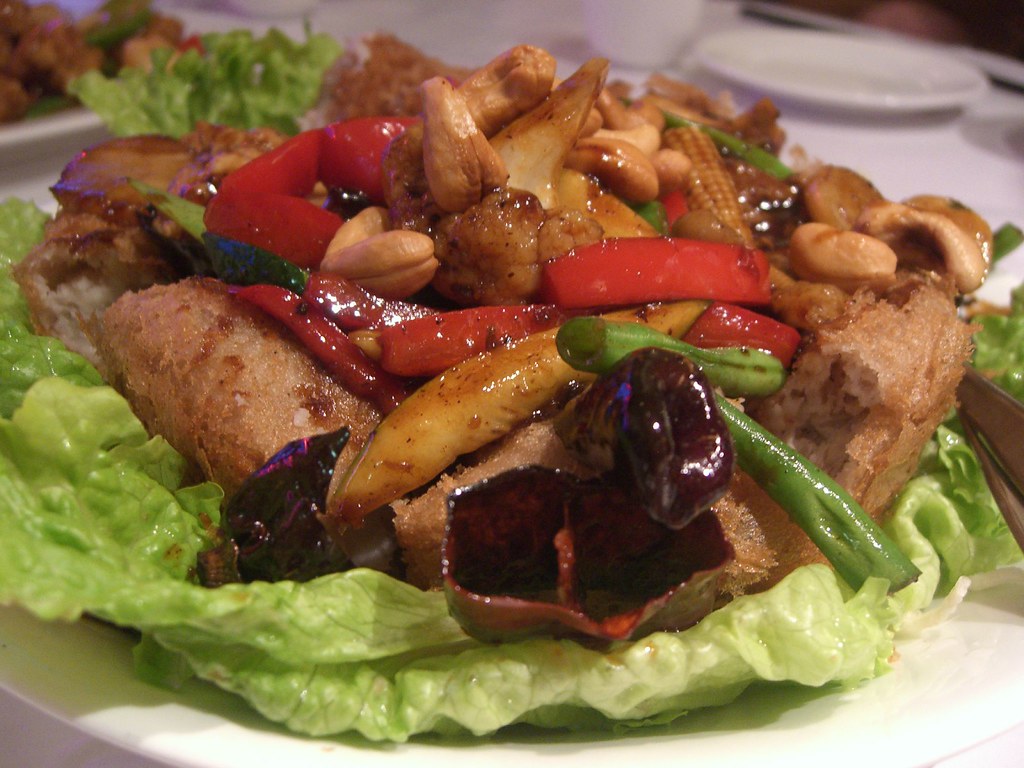
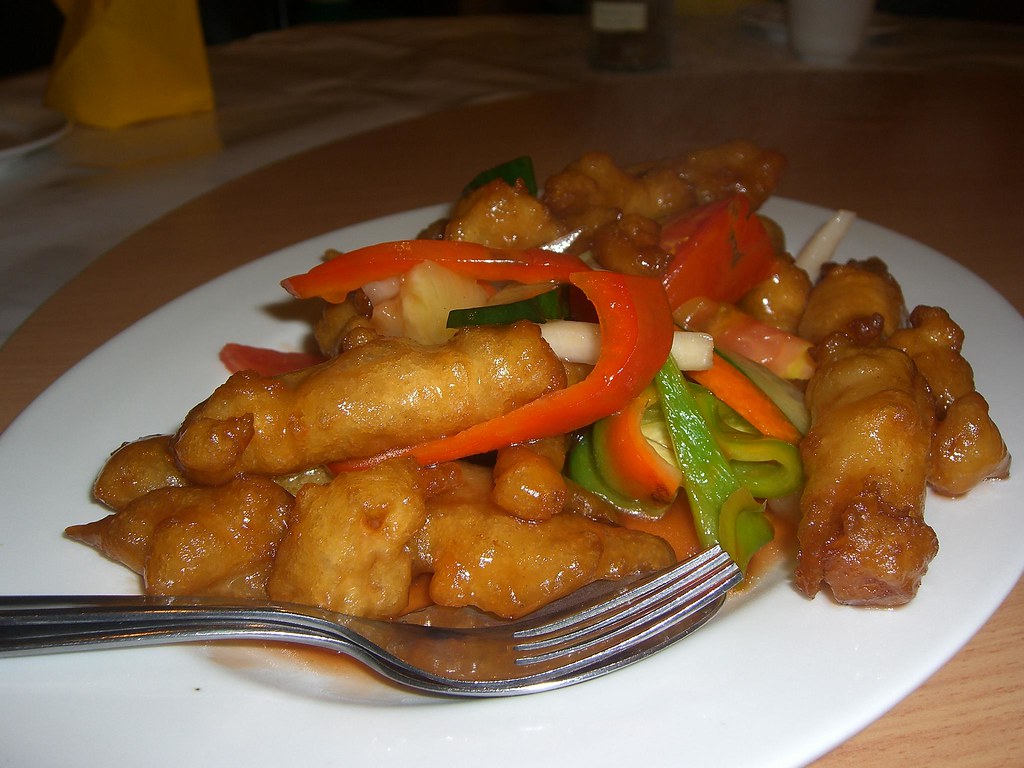
- Heavy on mock meat: zhai cooking is famous for its inventive imitations of meat dishes, built from soy protein, wheat gluten, tofu skin and mushrooms. “Mock char siew,” “vegetarian duck” and the like are a point of pride, not a compromise.
Because of the egg-and-dairy nuance, “vegetarian” and “vegan” are not interchangeable here. More on telling them apart below.
Sit-down vegetarian restaurants
Chinatown has a strong line-up of dedicated vegetarian restaurants, several of them long-running institutions.
- Yi Xin Vegetarian (43 Temple Street): a decades-old favourite serving home-style Chinese vegetarian fare, cai fan (economy mixed rice) and mock-meat dishes such as char siew. Portions are generous, prices are gentle, and the menu is largely vegan. It is busy with locals at lunch, and typically open daytime through early evening, closed Sundays.
- Eight Treasures Vegetarian (282A South Bridge Road): a sit-down restaurant right beside the Buddha Tooth Relic Temple, known for refined mock-meat cooking that turns classic Chinese banquet dishes meat-free. A good choice if you want a fuller, more leisurely meal.
Both sit in the heart of the heritage streets, so you can wander between them and the temples on foot.
Budget and hawker options
You do not need a restaurant to eat well meat-free in Chinatown. Some of the best value is at the hawker centres and food courts.
- Lian Xin Vegetarian Food Court: tucked into the basement of the Buddha Tooth Relic Temple on South Bridge Road, this air-conditioned food court runs a handful of stalls serving very affordable Buddhist vegetarian staples, think fried bee hoon, tofu and vegetable dishes and mixed rice, in a calm setting just below the temple.
- Maxwell Food Centre: the famous hawker centre at the corner of Maxwell and South Bridge Roads has dedicated vegetarian stalls alongside the meat ones, with reliable standbys like vegetarian bee hoon and mixed vegetable rice. Easy for a quick, cheap plate.
- Chinatown Complex: the largest hawker centre in Singapore, on Smith Street, has its own vegetarian stalls scattered through the food level. Look for “vegetarian” (素) signage and the usual cai fan, noodle and bee hoon options.
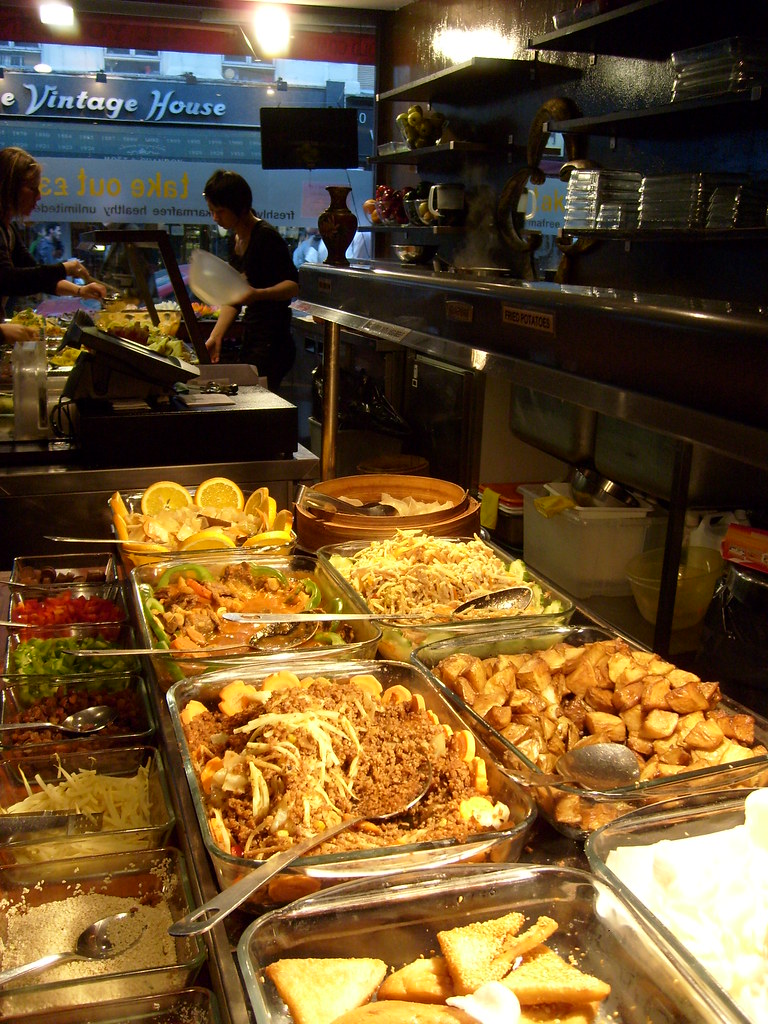
At cai fan (economy rice) stalls, you simply point at the cooked dishes you want over rice, which makes them an easy, low-commitment way to try several mock-meat and vegetable preparations at once.
Vegan-friendly cafes nearby
Beyond the traditional zhai kitchens, the shophouse streets just around Chinatown have picked up a cluster of modern vegan cafes serving plant-based takes on local favourites such as laksa and nasi lemak, often in a wellness-minded setting. One well-known fully plant-based restaurant, Whole Earth, sits a short walk away on Peck Seah Street by Tanjong Pagar, serving Peranakan and Thai-influenced vegetarian cooking and holding a Michelin Bib Gourmand for it. It is a sit-down treat rather than a quick bite, and easy to fold into a Chinatown day on foot.
Herbal tonics and TCM drinks
Chinatown is also the historic home of traditional Chinese medicine in Singapore, and that overlaps neatly with meat-free eating. The main thoroughfare, Eu Tong Sen Street, is named after the founder of Eu Yan Sang, the long-established TCM house whose shops and outlets you will pass in the area. Around the herbal halls and old shophouses you can pick up cooling herbal teas, longan or red-date drinks, and luo han guo (monk fruit) brews, all plant-based and a refreshing counterpoint to a hot afternoon of walking. They make a low-effort, distinctly local addition to a vegetarian itinerary.
Vegetarian or vegan? How to tell the difference
Because zhai food can include egg or dairy, vegans should not assume every “vegetarian” stall is safe. A few habits help:
- Ask about egg specifically: egg is the most common non-vegan ingredient in otherwise plant-based Chinese cooking, turning up in noodles, fried rice and some mock meats. A quick “no egg?” clears up most doubts.
- Watch for dairy and honey: these are rarer in traditional zhai food but more likely in modern cafe dishes and desserts.
- Lean on the strict-Buddhist kitchens: stalls that advertise “pure vegetarian” or no garlic and onion are usually following the stricter tradition that also drops egg and dairy, which tends to align with vegan needs, though it is still worth confirming.
- Use the mock meat to your advantage: dedicated soy-and-gluten mock meats are plant-based by design, so they are generally a safer bet than dishes that might hide egg or fish-based seasoning.
Where to base yourself for a meat-free food crawl
The joy of eating vegetarian in Chinatown is how tightly everything is packed: the restaurants, the temple food court, the hawker centres and the herbal halls all sit within a few minutes’ walk of one another. Staying in the middle of it means you can graze across several spots in a day without a single bus or train ride, and duck back to drop your bags between meals. If you are looking for a budget hostel in the heart of Chinatown, Rucksack Inn sits in a heritage shophouse on Temple Street with the whole meat-free map on its doorstep — budget bunk dorms, luggage drop and a sociable common area, a couple of minutes from the MRT.
Chinatown rewards the curious eater, and a vegetarian or vegan diet is no obstacle here, if anything it is an invitation. Start with a plate of mock-meat cai fan, work your way through the temple food court and the hawker stalls, cool off with a herbal tea, and you will see why this corner of Singapore has fed meat-free diners for generations.