|
Concerts at Singapore's National Stadium: What's On and How to Do the Night Right
National Stadium Singapore concerts: the 2026-27 line-up, which MRT exit to use, what you can bring in, and how to get home.
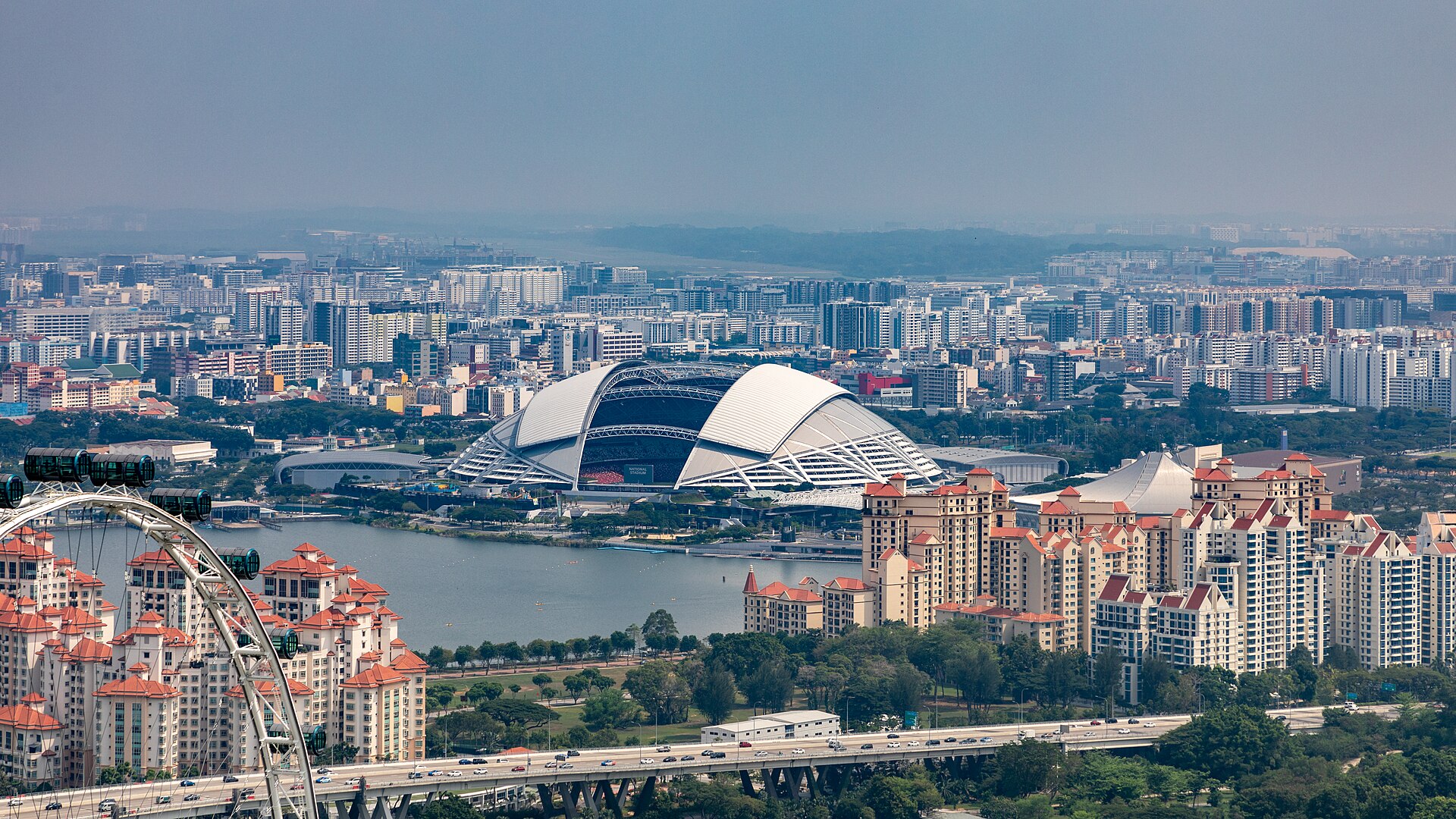
Between now and next March, Singapore’s National Stadium hosts more stadium-scale shows than it has in years, and the Indoor Stadium next door is busy nearly every other week. It is an easy venue to reach and a slightly confusing one to arrive at: twenty-three gates, a bag rule most people discover at the security line, and one MRT station everybody uses at once. Here is what is on, how to get in and out without losing an hour, and the rules worth reading before you pack. Dates and on-sale status were checked against Ticketmaster Singapore in August 2026, but both move fast, so confirm before you book anything.
What’s on at The Kallang: the 2026-27 line-up
The precinct now trades as The Kallang, and it holds two very different rooms. The National Stadium seats around 55,000 for football and stretches further for concerts. The Singapore Indoor Stadium next door holds roughly 4,000 to 12,000, which is why it gets the touring acts that would rattle around inside the dome.
At the National Stadium:
- Post Malone: 25 September 2026
- The Weeknd: 2 and 3 October 2026
- BIGBANG: 17 October 2026, the XX : COSMOS tour marking the group’s 20th anniversary
- Guns N’ Roses: 25 November 2026
- BTS: 17, 19, 20 and 22 December 2026
- Jay Chou: 8, 9 and 10 January 2027
- Maroon 5: 12 February 2027
- ENHYPEN: 14 March 2027
At the Indoor Stadium, the calendar runs closer together: Firdhaus on 12 September, ITZY on 3 October, LANY on 4 November, wave to earth on 20 November, BABYMONSTER on 28-29 November, the PGL CS2 Major from 10-13 December, and Westlife on 16-17 January 2027.
Tickets for the BIGBANG show went on general sale on 13 August 2026 through Ticketmaster Singapore, after a presale for official fan-club members. Several of the December and January dates were already listed as sold out when we checked, so treat the list above as a starting point rather than a live inventory.
Getting there: Stadium MRT and the six stops from Chinatown
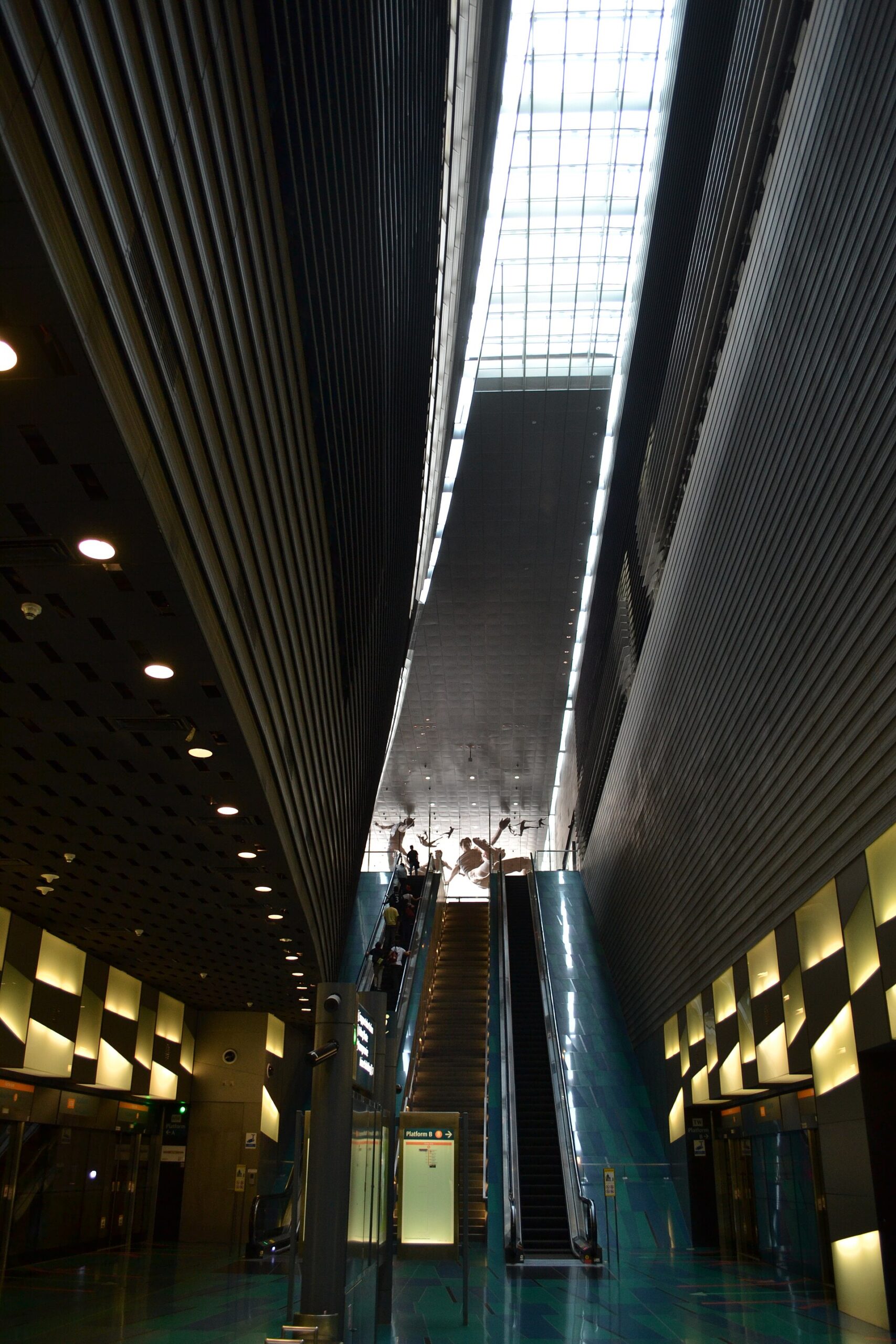
The closest station is Stadium (CC6) on the Circle Line, and its exits open straight onto the concourse shared by the National Stadium, the OCBC Aquatic Centre and Kallang Wave Mall. There is no road to cross and no long walk.
Which exit you want depends on your gate number, which is printed on your ticket:
- Gates 1-5 and 18-23: Exit A, turn right, then up the escalator to the Promenade on Level 3
- Gates 6-17: Exit B, turn left, then up the escalator to the Promenade on Level 3
If Stadium station is packed, Mountbatten (CC7), Kallang (EW10) and Tanjong Rhu (TE23) are all roughly a twelve to fifteen minute walk away, and on a busy night that walk is often faster than the queue. Buses 10, 14, 14A, 16, 16M, 70, 70A, 70M and 196 stop three to four minutes from gates 8-19. Bus 11 covers gates 1-7 and 20-23.
Coming from Chinatown, it is six stops and one change: take the Downtown Line four stops to Promenade, then the Circle Line two stops to Stadium. Allow twenty minutes door to platform and rather more on a show night, when the last few trains into Stadium fill up from the city end.
What you can and can’t bring in
This is where most first-timers lose time, because the rules are stricter than they look. The venue’s published conditions of entry set a hard bag limit of 35cm x 20cm x 30cm, and the test is whether it fits under your seat. Anything bigger is turned away at the gate, and there is no cloakroom inside, so a day pack is a bad idea.
On food and drink, outside food and beverage is not allowed in, and that explicitly includes bottled water and alcohol. The useful loophole: an empty plastic bottle is allowed and you can fill it inside. Individual promoters can override this and ban plastic bottles altogether, so check the event page if you plan to rely on it. Glass bottles, glassware, cans and spray cans are all out.
For K-pop and stadium-tour crowds, three limits matter more than the rest:
- LED and fan boards larger than A3 (42cm x 29.7cm) need prior approval
- Glow sticks and light sticks longer than 40cm need prior approval
- Banners and flags larger than 1m x 2m need prior approval
Also left at the door: laser pointers, tripods, monopods, selfie sticks, helmets, chairs and stools, drones, helium balloons, and any musical instrument or noise maker. Cameras are limited to phones and compacts. Video cameras, audio recorders and professional cameras with telephoto or zoom lenses are not permitted, and some promoters ban filming entirely. Umbrellas are allowed but you are asked not to raise them. Strollers cannot go into the seating areas and have to be parked in a designated spot. Anyone under 12 needs an adult of 18 or over with them.
One more that catches people out: re-entry is restricted and varies by event. Assume that once you are in, you are in.
Inside the dome: what the venue is actually like
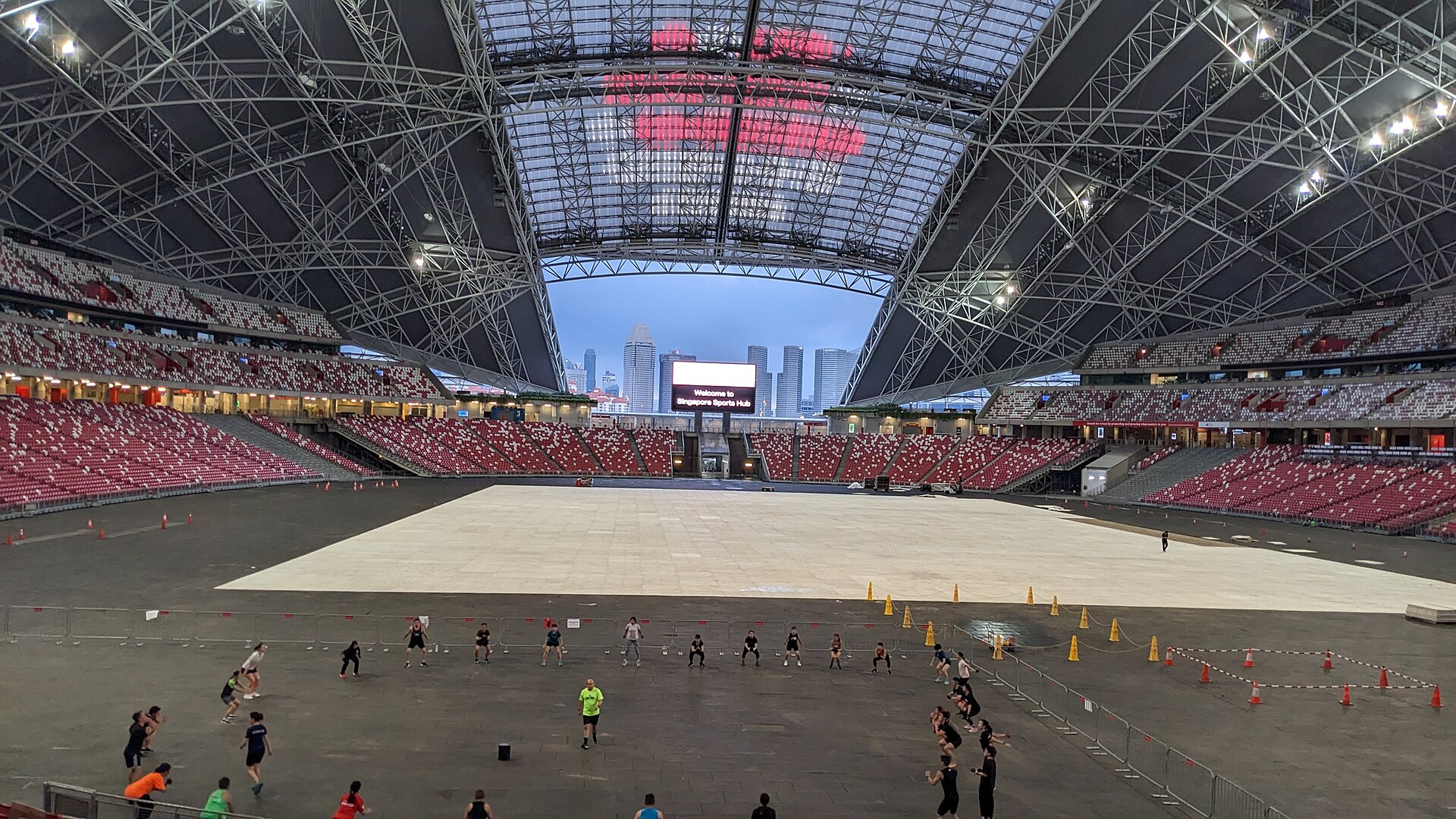
The National Stadium opened in June 2014 under an 83-metre steel dome with a retractable roof, which is why shows here run rain or shine. It is worth knowing that the stadium is not conventionally air-conditioned. It uses targeted cooling aimed at the seating areas rather than chilling the whole volume, so the effect is a pocket of cooler air around your seat rather than a cold room. In practice: dress as you would for a warm, humid Singapore evening, not for a shopping mall.
Capacity depends on the staging: football fills about 55,000 seats, while the concert record stands at 63,000, set by Taylor Swift’s Eras Tour in March 2024. For a general-admission floor show, the earlier you arrive the better your night, because the pit queue usually forms long before the published door time.
Eating before and after the show
Kallang Wave Mall sits on the same concourse as the stadium, which makes it the obvious pre-show option and, on a big night, a very crowded one. It works if you get there early. It does not work if you arrive an hour before doors with 40,000 other people.
The better play is to eat properly first and travel in with time to spare. Chinatown, six stops away, is set up for exactly this: hawker centres and kopitiams that serve fast and close early, plus sit-down places if the show is a late one. Our guide to where to eat in Chinatown covers both ends of that range, and if you are making a day of it before an evening show, a full day in Chinatown fits comfortably around a 7pm door time.
After the encore, most of Chinatown’s hawker stalls have shut, but the late-night supper spots along Keong Saik and around Maxwell run considerably later than anything you will find at Kallang.
Getting out after the encore
Stadium station was built with an open-air concourse and plaza precisely so that 50,000 people can leave without crushing into a ticket hall. It works, but it cannot change one fact: Stadium is served by the Circle Line only. It is not an interchange, so everyone leaving by train funnels onto one line in one of two directions.
Three things make that easier. Walking one station to Mountbatten or Nicoll Highway takes about as long as queuing and puts you on a train with space. The Kallang River park connector runs along one side of the site and is a pleasant fifteen minutes out of the crowd. And if your show finishes near the end of service, check the last train times on the day rather than trusting a rough figure. They differ by direction, and a long encore has stranded people before. A bus, or a walk to the next station down the line, is the reliable fallback.
The rest of the season: F1, lanterns and a very busy October
Stadium nights are not the only reason Singapore fills up this autumn, and if you are booking around one of them it pays to know what else is on.
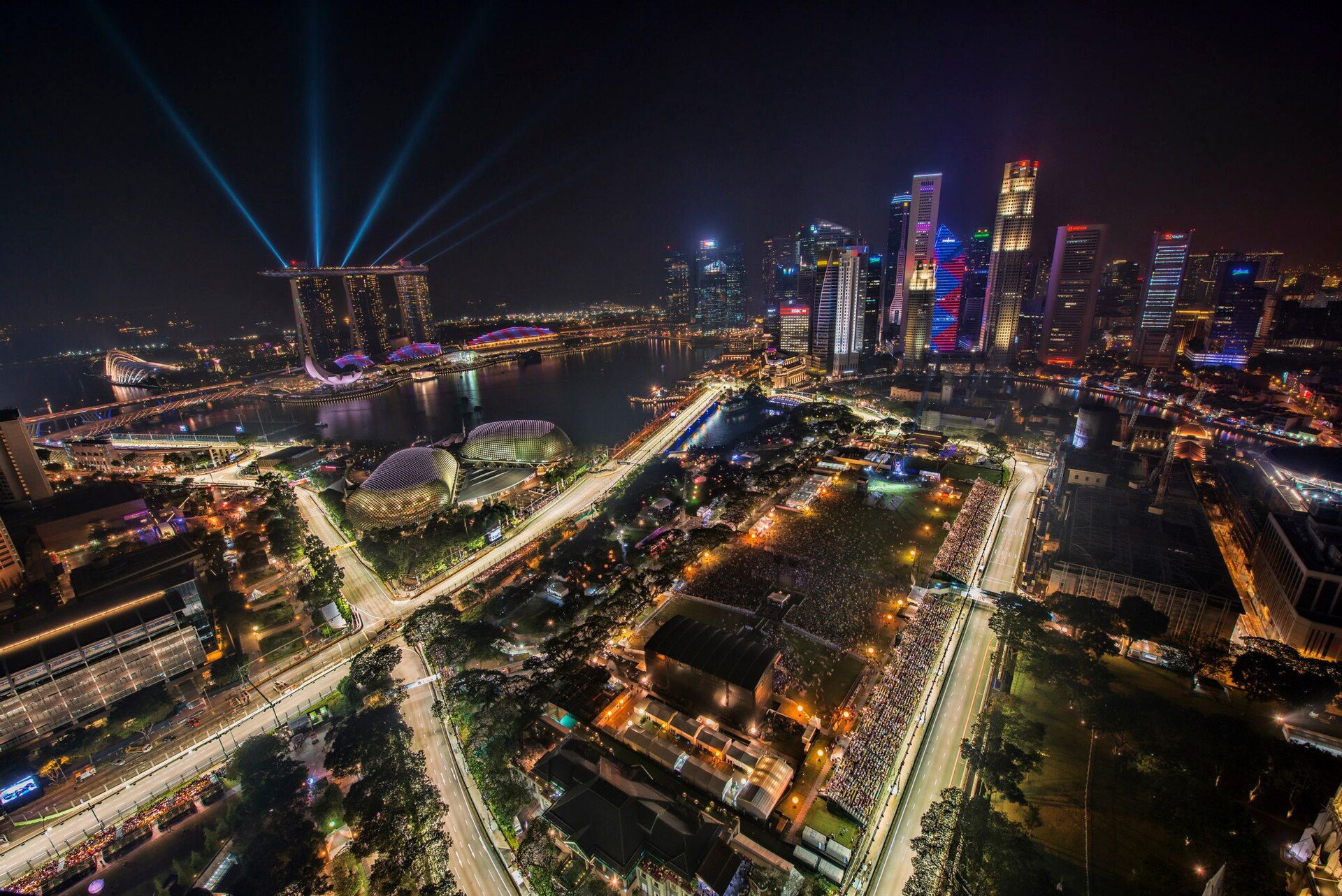
- The Formula 1 Singapore Grand Prix runs 9-11 October 2026 at the Marina Bay Street Circuit, and 2026 is the city’s first Singapore Sprint weekend, which means competitive running on all three nights
- Chinatown’s Mid-Autumn street light-up runs from 18 September to 20 October 2026, switched on nightly from 7pm until midnight, with the launch at Kreta Ayer Square on 18 September and the festival itself falling on 25 September
- Lanterns fill New Bridge Road, Eu Tong Sen Street, South Bridge Road and Upper Cross Street for that whole window
Stack those against the concert calendar and one stretch stands out: the F1 weekend on 9-11 October, The Weeknd on 2-3 October, ITZY on 3 October and BIGBANG on 17 October all land inside the light-up window. That is the busiest month of the year for beds in central Singapore. If your dates fall in it, book early and expect to pay more than you would in, say, late November.
Where to stay
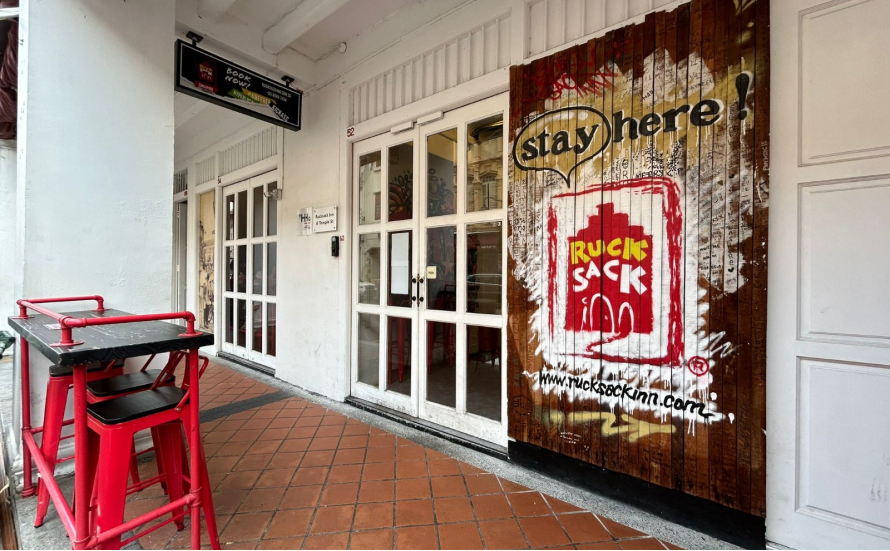
A stadium night ends late, and the thing you want afterwards is a short ride rather than a cheap one. Rucksack Inn sits in a heritage shophouse on Temple Street, about two minutes’ walk from Chinatown MRT, which puts the National Stadium six stops and one change away on the same trip you would make to get anywhere else in the city. It is a budget hostel in Chinatown built around bunk dorms and a sociable common area rather than privacy, so it suits people who are out all evening and back late. There is a luggage drop if your flight lands before check-in or leaves long after check-out, which is usually the shape of a trip built around a single show. Waking up in Chinatown also means breakfast is a five-minute walk instead of a train ride.
The other option is a second Rucksack Inn hostel in Lavender, on Tyrwhitt Road. Lavender MRT is about ten minutes’ walk from the door. Kallang is one stop from there on the East-West Line, and the stadium is another twelve to fifteen minutes on foot. About twenty-five minutes door to gate, and no Circle Line at any point. The two addresses work differently. From Chinatown the train sets you down on the stadium concourse, so it is quicker going in. From Lavender you walk more, but you skip the queue at Stadium station on the way out, which is the part of the night that really drags.
Frequently Asked Questions
Which MRT station is the National Stadium in Singapore?
Stadium station (CC6) on the Circle Line, whose exits lead directly onto the stadium concourse. Use Exit A and turn right for gates 1-5 and 18-23, or Exit B and turn left for gates 6-17, then take the escalator to the Promenade on Level 3. Mountbatten (CC7), Kallang (EW10) and Tanjong Rhu (TE23) are all about twelve to fifteen minutes’ walk and are often quicker on a busy night.
Can you bring water into the National Stadium?
Not a full bottle. Outside food and beverage, including bottled water and alcohol, is not permitted. An empty plastic bottle is allowed and can be filled inside the venue, although individual promoters can ban plastic bottles for their event, so check the event page first. Glass bottles and cans are never allowed.
What size bag can you take into a concert at the National Stadium?
Anything larger than 35cm x 20cm x 30cm is refused at the gate. The rule of thumb is that your bag must fit under your seat. There is no bag storage inside, so travel light or leave a larger bag where you are staying.
Are light sticks and LED fan boards allowed?
Yes, within limits. Light sticks and glow sticks longer than 40cm, LED and fan boards larger than A3 (42cm x 29.7cm), and banners or flags larger than 1m x 2m all require prior approval for the event. Standard official fan-club light sticks sit comfortably inside those limits.
How far is the National Stadium from Chinatown?
Six MRT stops with one change: the Downtown Line from Chinatown four stops to Promenade, then the Circle Line two stops to Stadium. Allow about twenty minutes, and longer on an event night when trains fill up before they reach Stadium.
What time should you arrive for a concert at the National Stadium?
For seated tickets, arriving about an hour before the published start time is comfortable, allowing for the security check and the walk to your gate. For general-admission floor tickets, queues form much earlier in the day. Bear in mind that re-entry is restricted, so eat before you go in rather than planning to step out.
Sources
- The Kallang, Conditions of Entry for Events at the National Stadium (bag, light stick, banner, food and drink and camera rules)
- Ticketmaster Singapore (the 2026-27 line-up dates and on-sale status)
- Chinatown Festivals (Mid-Autumn street light-up dates)
- Singapore Grand Prix (Formula 1 race weekend dates)
Related reading