|
Chinatown Street Art & Instagram Spots
A guide to Chinatown street art in Singapore: where to find Yip Yew Chong’s heritage murals, the best Instagram spots, photo timing and an easy walking route.
Chinatown is Singapore’s most photogenic heritage quarter, and a lot of that comes down to its walls. Tucked into back lanes and painted across temple facades, a series of large heritage murals turn an ordinary stroll into a slow-motion treasure hunt. Most are the work of one local artist, and once you know where to look, you can string them together into an easy half-day on foot. Here is where to find the best Chinatown street art, how to photograph it, and the route that links it all together.
The artist behind most of the murals
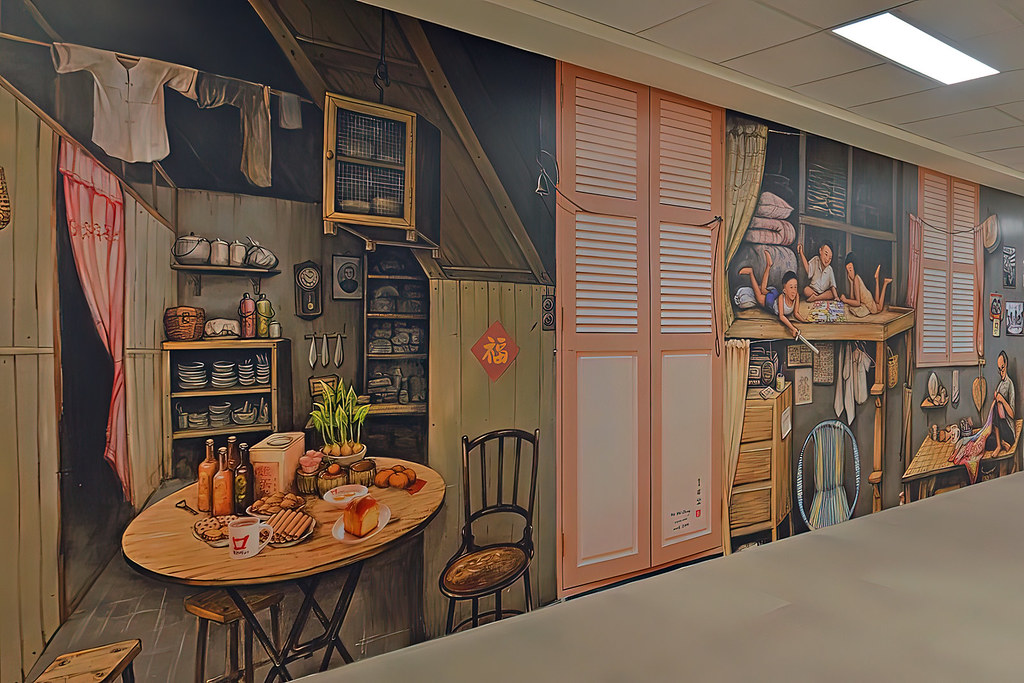
Nearly all of Chinatown’s heritage murals come from Yip Yew Chong, a Singaporean who grew up in the area and began painting walls in 2015 after being inspired by the work of Lithuanian street artist Ernest Zacharevic in Penang. His style is warm and nostalgic, recreating scenes from old Chinatown: itinerant hawkers, traditional trades, crowded family homes and Cantonese opera. The figures are roughly life-sized and designed to be stepped into, which is exactly why they have become some of the most shared photo spots in the city.
Thian Hock Keng temple mural
The single most impressive piece is the long scroll-style mural on the back wall of Thian Hock Keng, Singapore’s oldest Chinese temple. Painted by Yip Yew Chong in 2017 and stretching more than 40 metres, it reads like a Chinese hand-scroll, telling the story of the early Hokkien immigrants who sailed from southern China and helped build the city. The temple itself sits on Telok Ayer Street, but the mural runs along the back of the building facing Amoy Street, so walk around to find it.
This is a detail-rich wall, so give it time. Look for the small vignettes worked into the larger journey: the sea crossing, the dialect associations, the trades that took root once families settled.
Mohamed Ali Lane
This narrow lane off South Bridge Road holds a trio of Yip Yew Chong murals on the side of a shophouse, each celebrating a vanished trade. One shows a seller of paper masks and puppets, another a traditional mama shop stacked with old-school snacks and bottled drinks, and the third a craftsman making lion-dance heads. They sit at a comfortable height for posing, and the lane is quiet enough that you rarely have to wait long for a clear shot.
The Temple Street and Smith Street cluster
The heart of the mural trail runs through the lanes around Temple Street and Smith Street, where several works sit within a few minutes of each other.
- Cantonese Opera: at the junction of Temple Street and South Bridge Road, a vivid scene of opera performers in full painted faces and elaborate costumes.
- The Clog Maker: on Temple Street, a quieter tribute to the craftsmen who once made traditional wooden clogs.
- My Chinatown Home: in an alleyway off Smith Street, an interior scene recreating the cramped, communal shophouse home the artist grew up in, down to the shared wooden bed.
Because these are so close together, this stretch is the easiest place to rack up several photos quickly, and the lanes themselves, with their restored shophouses and red lanterns, make a strong backdrop in their own right.
The Samsui woman on Erskine Road
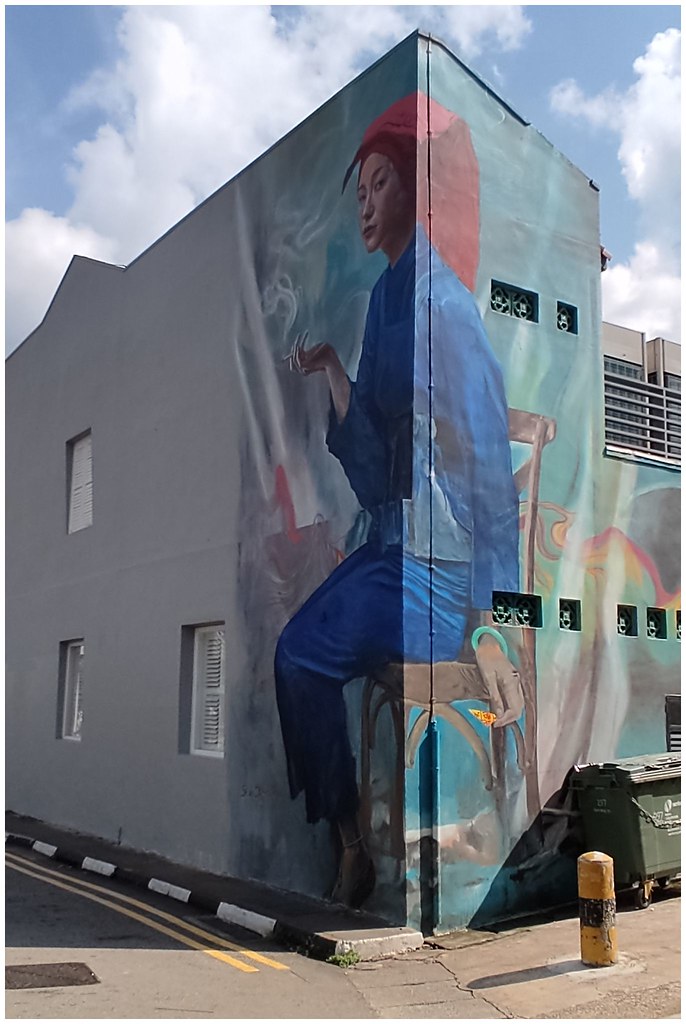
Newer than the heritage murals is the large two-storey portrait of a Samsui woman, painted by artist Sean Dunston, on Erskine Road near the Buddha Tooth Relic Temple. It drew plenty of attention for depicting the woman with a cigarette, a once-common habit among the female labourers who helped build early Singapore; after a public debate the mural was kept in place, and a plaque has since been added explaining the context. It is one of the boldest pieces in the area and worth the short detour.
Best times to shoot
Light makes a real difference here, since most murals are in tight lanes.
- Early morning: the lanes are empty, so you get clean shots without crowds wandering through the frame.
- Late afternoon: the low golden-hour light warms up the colours and is the most flattering for the temple mural in particular.
- Avoid harsh midday: overhead sun throws strong shadows from the shophouse eaves across the walls.
For the interactive murals, step back and frame yourself in line with the painted figures rather than standing flat against the wall, which is what makes the pose-with-the-scene effect work.
A simple walking route
You can link the main spots into a loop of well under two hours, longer if you stop to eat.
- Start: Thian Hock Keng, walking the back wall on Amoy Street for the big mural.
- Then: cut across to Mohamed Ali Lane off South Bridge Road for the trade murals.
- Next: wander the Temple Street and Smith Street lanes for the Cantonese opera, clog maker and My Chinatown Home pieces.
- Finish: loop to Erskine Road for the Samsui woman, near the Buddha Tooth Relic Temple.
The whole circuit is flat, compact and entirely walkable, which is the real appeal of doing Chinatown on foot rather than hopping between MRT stops.
Frequently asked questions
Is Chinatown’s street art free to see?
Yes. Every mural mentioned here is on a public wall or lane, so the whole trail costs nothing. The only thing you might spend on is the food and coffee you will inevitably stop for along the way.
Who painted most of the Chinatown murals?
The majority are by Yip Yew Chong, a Singaporean artist who grew up in Chinatown and began painting heritage scenes in 2015. His works recreate old trades and family life in the area. The large Samsui woman portrait on Erskine Road is a separate piece by artist Sean Dunston.
Where is the big temple mural exactly?
It runs along the back wall of Thian Hock Keng temple. The temple’s entrance is on Telok Ayer Street, but the mural faces Amoy Street, so walk around the building to find the full scroll.
How long does the mural walk take?
At a relaxed pace the loop takes well under two hours. Add time if you stop to photograph each scene properly or break for a meal in the Smith Street and Maxwell area, which sits right on the route.
Do I need a special camera?
No. A phone is more than enough, since the murals are designed to be viewed close up and posed with. The bigger factor is timing your visit for soft morning or late-afternoon light rather than harsh midday sun.
Make it an easy walk
The murals reward an unhurried pace, and being able to set out early, before the crowds, or circle back for better light is far simpler when you are already in the neighbourhood. Staying inside the quarter turns the whole trail into a casual morning rather than a day trip, so it is worth choosing a central Chinatown hostel in Singapore when you plan your visit. Rucksack Inn sits in a heritage shophouse on Temple Street, minutes from the murals and the MRT, with budget bunk dorms and luggage drop — an easy base for chasing the best light without a commute.
Chinatown’s walls are some of the most rewarding free sights in Singapore, layering the area’s history into scenes you can literally step inside. Take your time, watch the light, and let the lanes lead you from one mural to the next.
Related reading