
|
The Portuguese Settlement & Eurasian Melaka
Visit the Portuguese Settlement Melaka (Medan Portugis): meet the Kristang community, taste devil curry, see San Pedro and time your trip for the June feast.
Most visitors to Melaka never leave the heritage core of Jonker Street, the Stadthuys and St Paul’s Hill. But a few kilometres east, along the coast at Ujong Pasir, sits one of the most unusual neighbourhoods in Southeast Asia: the Portuguese Settlement, or Medan Portugis. This is the home of the Kristang, the Portuguese-Eurasian community whose roots reach back to the city’s brief Portuguese era in the 16th century. It is quiet by day and comes alive in the evening, and it tells a side of Melaka’s story that the famous landmarks only hint at.
Who are the Kristang?
The Kristang are a creole community descended mainly from Portuguese settlers and local Malay families, with Chinese, Indian and Dutch ancestry mixed in over the centuries. They formed in Melaka during the Portuguese period and have held on to a distinct identity ever since, long after the Portuguese, Dutch and British had each come and gone.
Their language, Papia Kristang (also called Cristao or simply Papia), is a Portuguese-based creole that is now severely endangered, with only a few hundred fluent speakers left in Melaka and revival efforts under way in Singapore and beyond. You may still hear older residents greeting one another in it around the square.
The Settlement itself was created deliberately. In the 1930s, land was set aside in Ujong Pasir to give the scattered Kristang families a place of their own, and the community has clustered there since. It is often described as the last remaining Portuguese-Eurasian village in Asia, which is exactly what makes it worth the short trip out.
Medan Portugis: the Portuguese Square
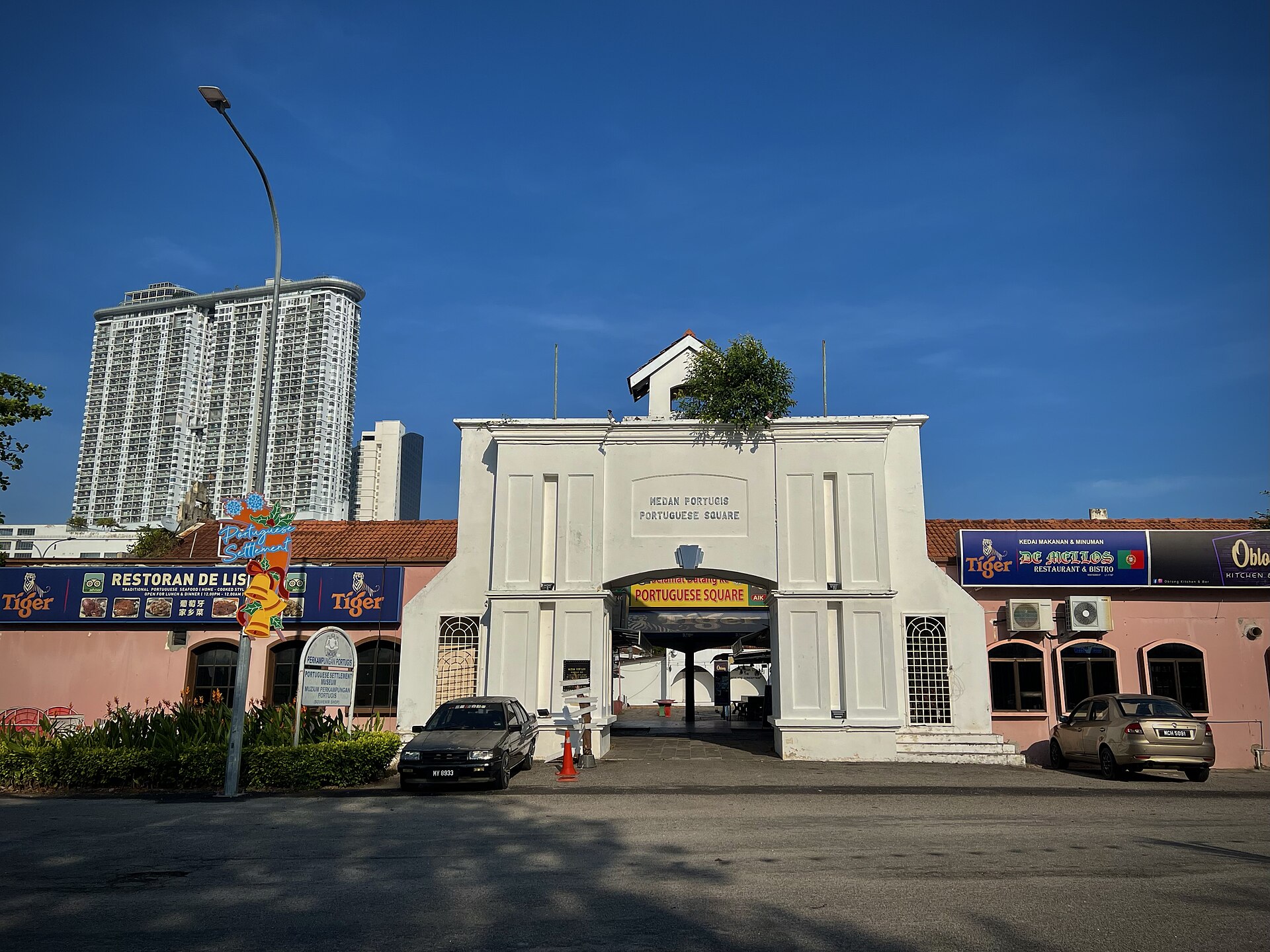
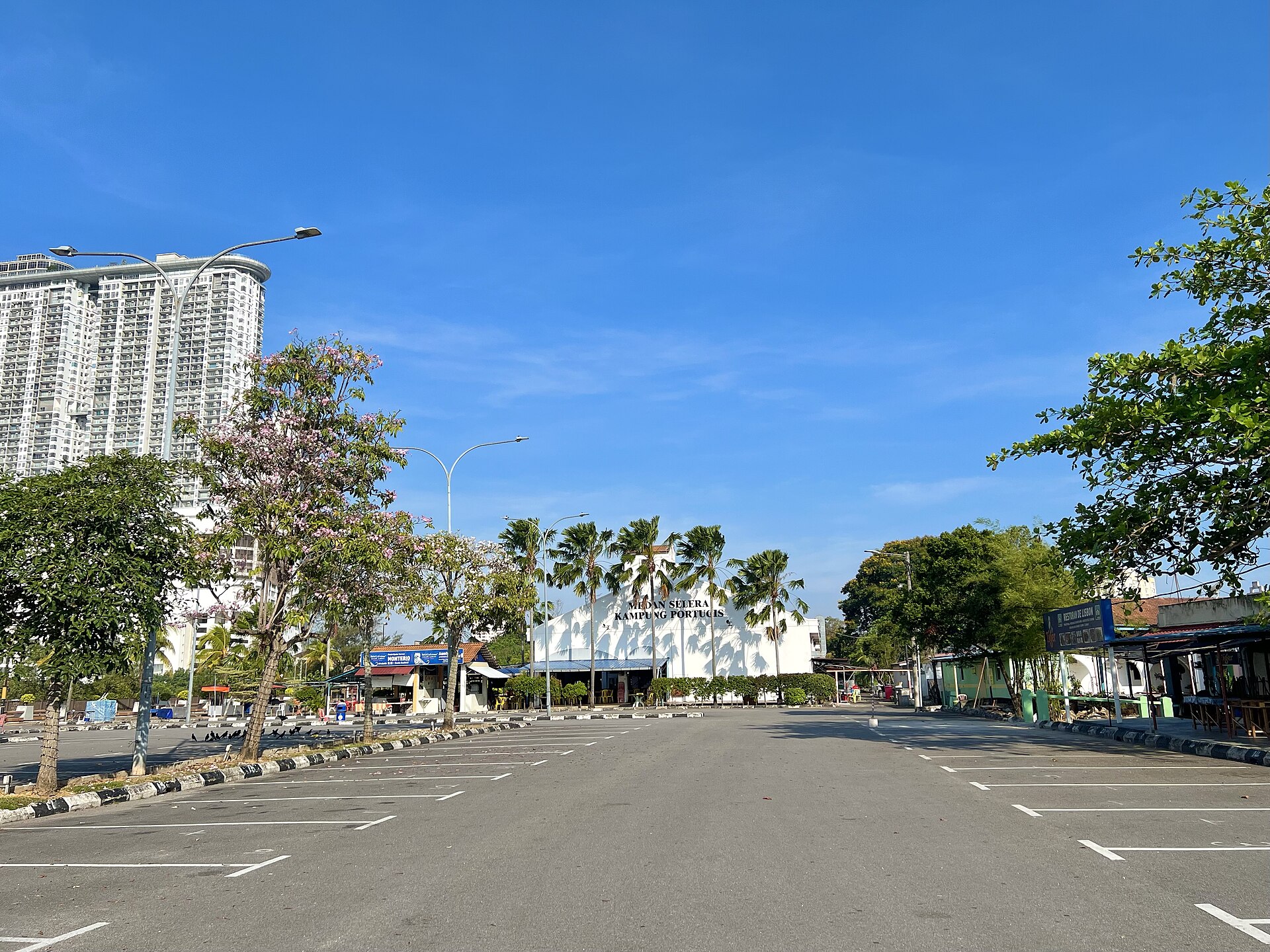
The heart of the neighbourhood is Medan Portugis, the Portuguese Square, a seafront plaza built in the 1980s in a loosely Iberian style as part of a tourism push twinning Melaka with Lisbon. It is a modest place rather than a grand one, but the setting on the Strait of Malacca is lovely at dusk, and the square is ringed by family-run restaurants and stalls.
There is no admission charge to wander in, and the square is at its best in the late afternoon and evening, when the heat eases, the sea breeze picks up and the eateries open. By day it can feel sleepy, so plan your visit for the second half of the day.
Eurasian food: devil curry and the Kristang table
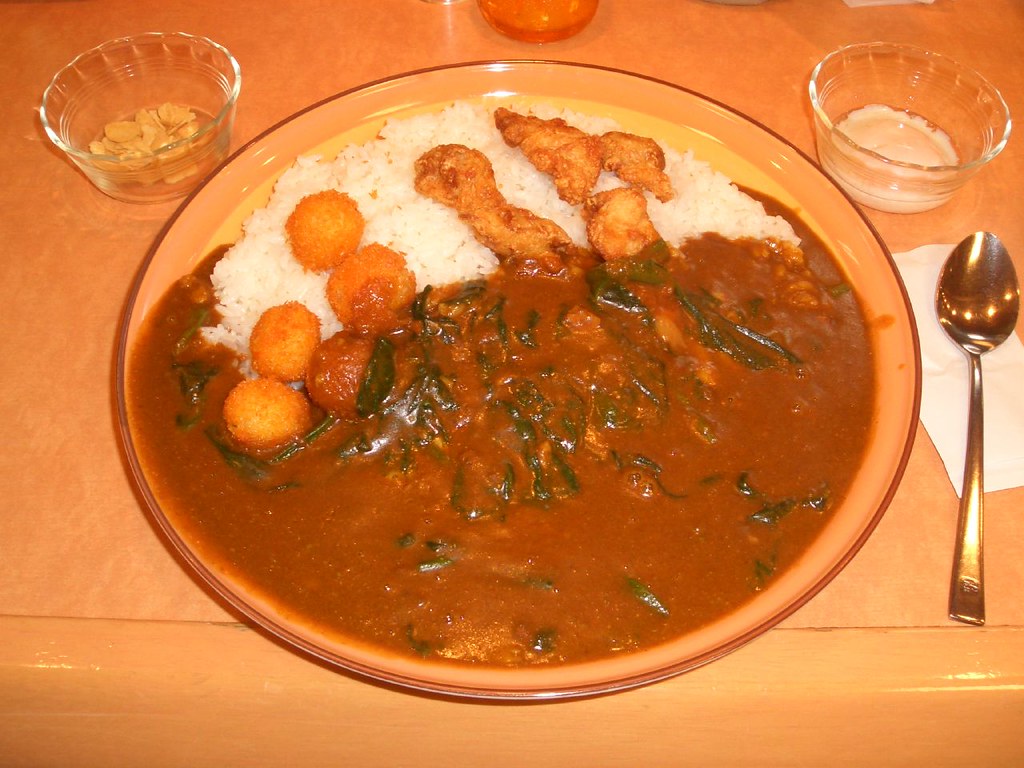
The real reason food lovers make the trip is the Kristang kitchen, a one-of-a-kind blend of Portuguese, Malay, Chinese and Indian cooking that you simply cannot find anywhere else in Malaysia.
The signature dish is devil curry, known in Kristang as curry debal. Do not let the name scare you off entirely: debal actually means leftovers, a nod to its origins as a way of using up Christmas roast meats. The result is a tangy, fiery curry built on vinegar, candlenuts, mustard seeds, ginger and a generous hit of dried chilli, traditionally with chicken. It is sharp, spicy and unlike any other curry you will have eaten.
Beyond devil curry, look out for these Eurasian and Kristang staples:
- Portuguese baked fish: a whole fish smothered in sambal, wrapped in banana leaf and grilled, a Medan Portugis classic.
- Seafood off the strait: grilled prawns, squid and clams are the square’s bread and butter, best enjoyed at a table facing the water.
- Sugee cake: a rich, buttery semolina cake of Eurasian tradition, often kept for festive occasions.
Prices and opening days vary from one family kitchen to the next, so it pays to check what is open before you go, especially on quieter weekdays.
San Pedro and the community’s churches
Catholicism is central to Kristang identity, and the community’s faith is woven into the local landmarks. A short distance from the Settlement stands St Peter’s Church, built in 1710 and recognised as the oldest functioning Roman Catholic church in Malaysia, dedicated to the patron saint of fishermen. Its Good Friday processions are among the most significant Catholic observances in the country.
The community’s own patron is San Pedro, Saint Peter, fittingly for a village that has long lived from the sea. If you enjoy learning how a city’s monuments connect to living communities, it is worth reading the stories behind Melaka’s landmarks alongside a visit here, because the Portuguese Settlement is where one strand of that history is still lived day to day rather than displayed in a museum.
The Feast of San Pedro
If you can time it, the Settlement is at its most vivid during the Feast of San Pedro, the community’s biggest celebration. It falls around 29 June, Saint Peter’s feast day, and unfolds over several days of food, music and religious observance.
The highlight is the blessing of the fishing boats, when residents decorate their vessels with flags, flowers and religious icons to ask San Pedro’s protection for a good catch. There are church services, processions, cultural performances and stalls, and the whole village turns out. Christmas is the other big season here, when families string their houses with lights and nativity displays. Either occasion transforms a quiet square into something genuinely memorable.
How to get to the Portuguese Settlement
The Settlement lies about four kilometres east of central Melaka, in Ujong Pasir, so it is a short hop rather than a long journey. Your options:
- By Grab: the easiest choice. A ride-hailing car from the Jonker Street area takes roughly 10 to 15 minutes, and it spares you the walk back in the dark after dinner.
- By bus: public buses run out towards Ujong Pasir from the town centre near Dutch Square, though services thin out in the evening, which is exactly when you will want to be there.
- By bicycle: the flat coastal route is doable if you enjoy cycling, but check the daylight, as the ride back is less pleasant after sunset.
Because the Settlement is out of the centre and best after dark, the practical move is to base yourself in town and treat it as an evening excursion. Staying in the heritage zone — for instance at Rucksack Inn Premium Melaka, a comfortable Melaka hostel near the heritage core — means you are minutes from Jonker Street by day and only a short Grab ride from a Kristang seafood dinner by night. Back at base there’s a pool to cool off in and a room to suit you when you call it a night — twin and queen privates, a family suite for groups, a Garden Suite with a jacuzzi tub, or a budget ensuite dorm.
Is it worth the trip?
The Portuguese Settlement will not dazzle you with grand architecture, and that is rather the point. What it offers instead is something increasingly rare: a chance to encounter a small, living community that has preserved its language, faith and cuisine against long odds. Come hungry, come in the evening, and if you can swing it, come for the June feast. It rounds out a Melaka trip in a way the heritage-core attractions cannot.
Pair it with the central sights during the day, leave the Kristang table for the evening, and you will go home with a far fuller picture of what makes Melaka one of the most layered cities in the region.
Related reading